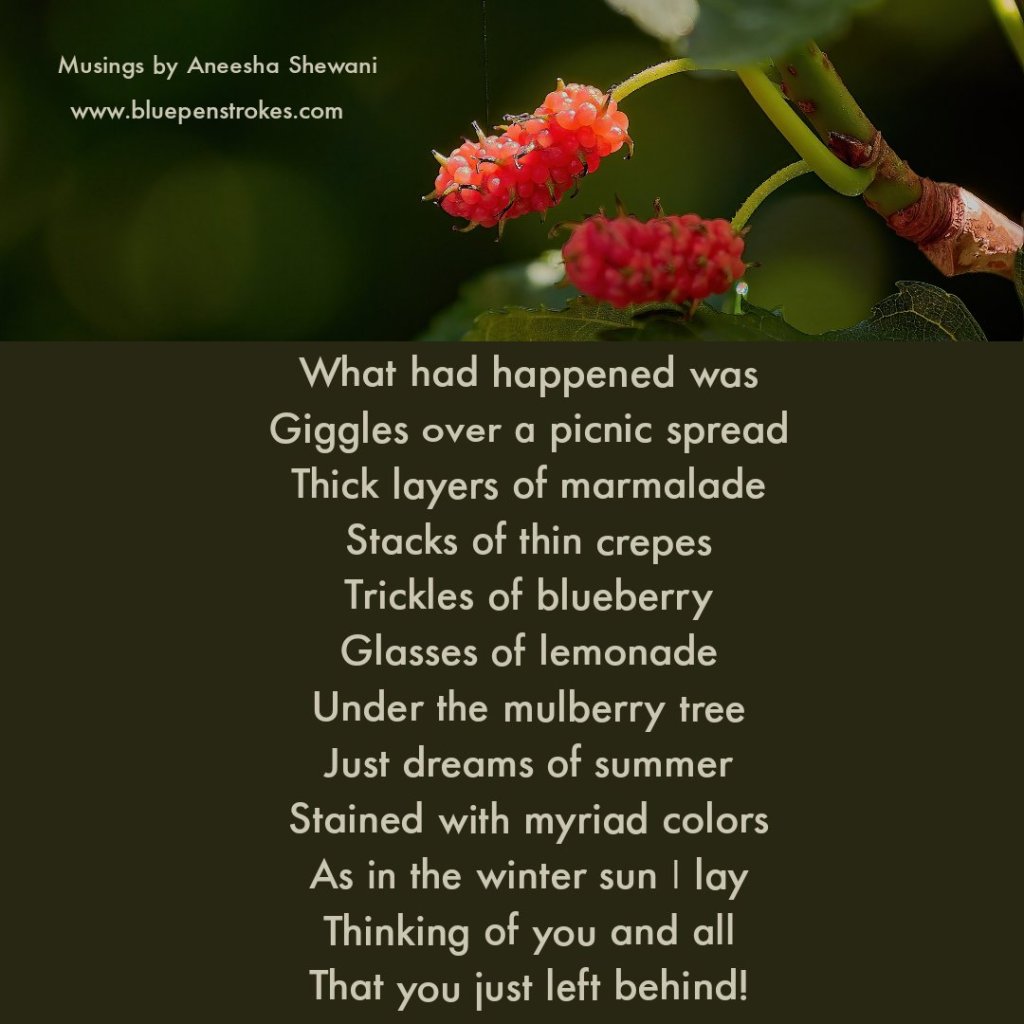
What had happened was Giggles over a picnic spread Thick layers of marmalade Stacks of thin crepes Trickles of blueberry Glasses of lemonade Under the mulberry tree Just dreams of summer Stained with myriad colors As in the winter sun I lay Thinking of you and all That you just left behind!
On a Sunday morning A summer-perfumed breeze Rocks the hammock A book cover gazes Vacantly at azure skies A fly lazily sits on the rim Of an empty flute of nectar Thoughts doze off embracing An idyllic disregard For chores and such Until a mundane morrow
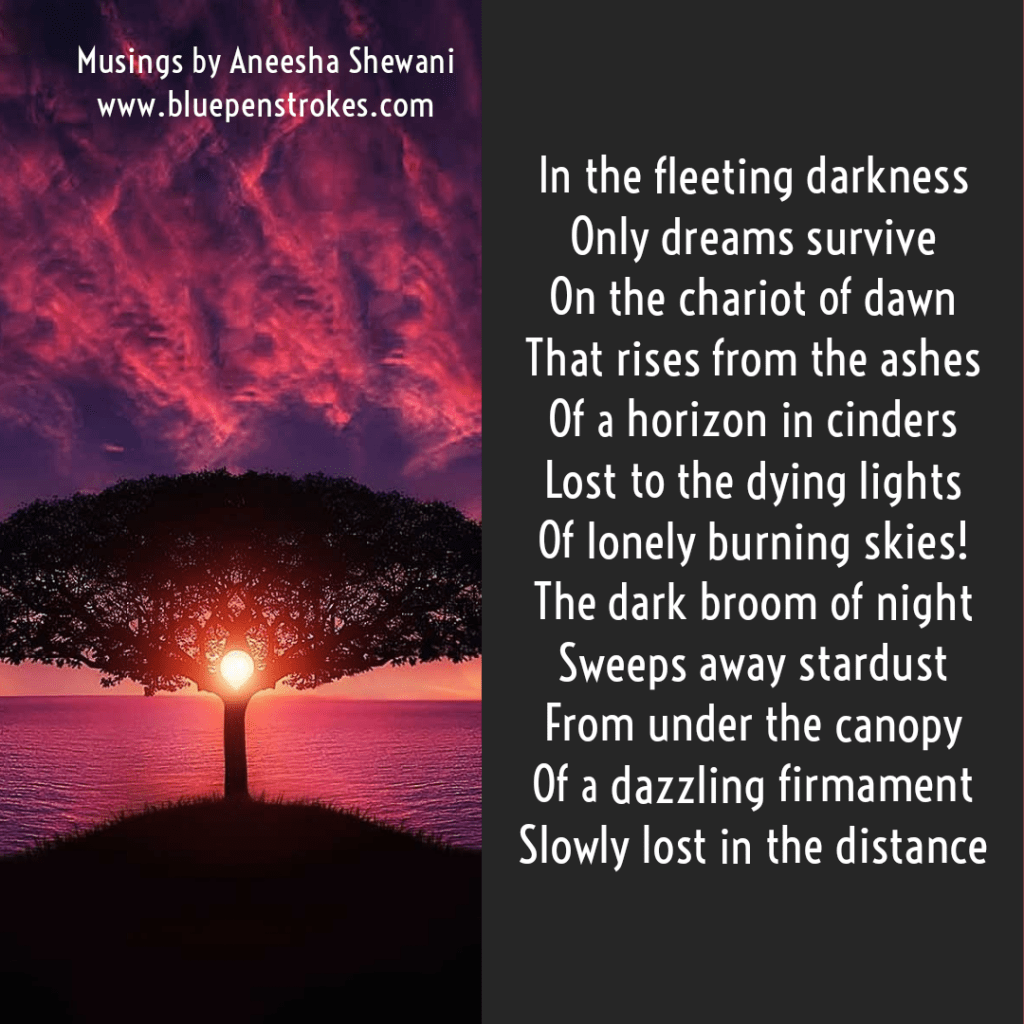
In the fleeting darkness Only dreams survive On the chariot of dawn That rises from the ashes Of a horizon in cinders Lost to the dying lights Of lonely burning skies! The dark broom of night Sweeps away stardust From under the canopy Of a dazzling firmament Slowly lost in the distance
Anu Kay’s novel, Like the Radiant Sun, is an engaging tale spanning a plethora of themes. It is a thriller full of suspense with the mild aroma of a romance playing out in the foreground of a mystical, mythological drama. It has the feel of a Bollywood movie and the enticement of a well-researched and rendered novel.
Is it destined or planned that a precious, ancient text lands in the hands of an archaeologist, Rohan Sharma? He is just the man to appreciate, interpret, and preserve the words, outlining a rare discipline of combat with esoteric origins. But is he also the man who embodies the physical and mental prowess to outsmart the baddies desperate to lay their hands on the Marma Kala, an ancient manuscript on martial arts?
In the background of this intellectual pursuit lurks a gruesome mystery of a dead priest and a woman in dreadlocks. On this premise, the writer builds a fascinating story oft intercepted by quotes and passages from ancient Indian texts. The book has a fast pace and yet finds space for some attractive imagery, such as, “With cracks of thunder, rain followed like a torrent, whipping up the angry waters of the river.”
Mysterious people across some significant places in India – Varanasi, New Delhi, Kerala, and the revered Mount Kailash – pursue the protagonist. The writer brings out the mesmerizing charm and history of these places. She calls Varanasi, “a magnificent amphitheater of a bygone era.” She draws up pictures with words. For example, there is a scene of a person draped in a red shawl, spurring his black horse through the hills of a spice plantation, as dark clouds loomed.
There is occult, bloodshed, suspicious characters, and a narrative that keeps you on the edge. References to mystical symbols, seals, ancient arts and medicine, and mythological tales embellish the story. When you are reading fiction but bookmark items for further research, the writer has successfully captured your attention.
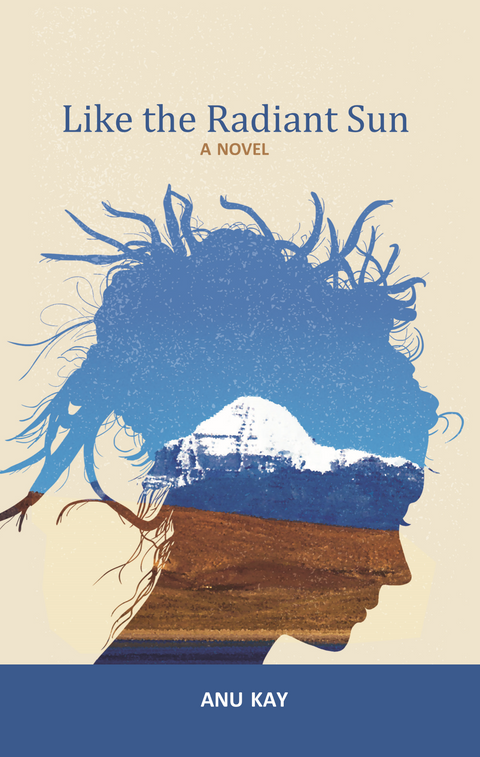
The language is polished and carefully edited, which makes the reading smooth. The characters are well-fleshed out. Their backgrounds are well-enunciated to make it easier to grasp their intentions. The book cover art speaks to the theme of the book and outlines a significant character. I felt the book title could have been more imaginative and alluring. As a lover of historical and mystical stories, Anu Kay’s work provides me with a fine piece of fresh and engaging literature that truly brings out the charm of our Indian heritage.
I thought I’d survive without you But I couldn’t say goodbye For the words lay tangled At your doorstep Afraid to cross the threshold Into a life where you Would not be waiting At sundown, by the yellow lamp A book in hand, the kettle whistling Eager to tell and know Of just another mundane day




 Blue Pen Strokes