
Book Review: The Girl on Fire

A Twisted Tale of Crime and Consequence.

Book: The Girl on Fire

Author: Devashish Sardana

Genre: Fiction, Crime Thriller, Murder Myster

Review copy: Book Reviewers Club

Available at: Amazon.in

Recommended: Good

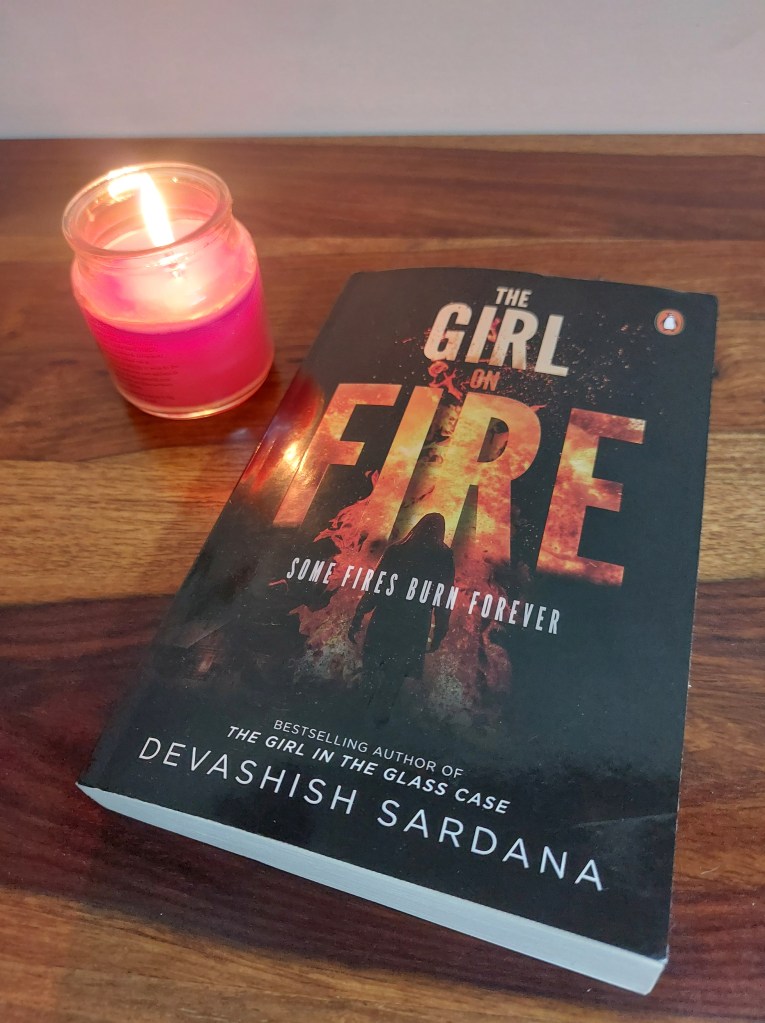
Devashish Sardana’s – The Girl on Fire – plunges readers into the eerie fog of Kullu, Himachal Pradesh, where the mist carries more than just whispers—it holds the smoke and ashes of a gruesome crime. IPS Simone Singh, a six-foot-tall, no-nonsense officer with a tonsured head, and Inspector Lucas, her observant, joke-cracking counterpart, step into a case rooted in troubled childhoods and distorted adult desires.

The novel wastes no time in setting its stage. The perpetrator is clear, yet remains just out of reach—an unsettling crime thriller paradox that keeps the tension alive. Sardana expertly manipulates perception, ensuring that nothing is quite as it seems.

Unlike traditional detective fiction – The Girl on Fire – doesn’t rely on meticulous sleuthing. Instead, it delves into forensic and police procedures, offering a detailed look at crime-solving mechanics. The evidence is largely circumstantial, the motivations shadowed by trauma, yet the intrigue never wavers. The novel’s opening is gripping, instantly immersing the reader in a world where deception and psychological scars intertwine. As the investigative duo tries to uncover the motive, Lucas’s sudden revelation pushes the investigation toward a definitive direction. Yet it feels somewhat flimsy—an easy turning point that could have carried more weight, given the gravity of the crimes.

Sardana’s writing is impeccable and taut, crafting a narrative that shifts seamlessly between past and present, examining events from multiple perspectives. This layered storytelling enriches the novel, drawing readers deeper into the complexities of crime, psychological manipulation, past traumas, and survival. Alongside the core investigation, an emerging subplot teases a future novel, leaving hints of unfinished business. While Lucas’s presence adds levity to the dark themes, sharper elements of intelligent humor could have deepened his character.

At its heart, The Girl on Fire is more than a gripping thriller—it’s a stark reminder of the horrors, pain, and trauma so many girls and women endure throughout their lives. Not all emerge unscathed, and the novel refuses to soften these wounds. Though the conclusion ties up loose ends and resolves the cases, justice—particularly for the wronged female lead—feels incomplete, leaving behind an unsettling sense of unfinished reckoning.

For readers who favor crime fiction with psychological depth over classic detective work, The Girl on Fire delivers. Sardana weaves a chilling, fast-paced tale where the most haunting truths lurk in plain sight.


I received a review copy, and I am leaving this review voluntarily.

Book Review: Ziggy on the Rock

This book celebrates the beauty and culture of the Virgin Islands through the adventures of a young boy named Ziggy.

Book: Ziggy on The Rock:
A Day on the Rock

Author: C.M. Rohan
Illustrated by Sophia Foster

Genre: Fiction, Children’s fiction, Graphical novella

Review copy: Author-provided

Available at: Amazon.com

Recommended: Good

A Day on the Rock is a delightful children’s book that beautifully captures the essence of life in the Virgin Islands through the eyes of a young boy named Ziggy. Written by C.M. Rohan and exquisitely illustrated by Sophia Foster, this heartfelt narrative serves as a dedication to the author’s nephew and daughter, as well as to all the children of the Virgin Islands.

The story follows Ziggy as he embarks on a day filled with adventure and discovery on an island called The Rock. From waking up to the bright morning sun and enjoying breakfast with his grandma to exploring the local market and playing at the beach, each moment is depicted with vibrant illustrations and engaging text. The rhythmic cadence of Rohan’s prose makes this an excellent read-aloud choice. References to luscious local fruits, warm snacks, and the natural surroundings transport readers to a world of quiet charm, where Ziggy, with his curly mop of hair and big, bright smile, teaches children about the joys of a balanced day filled with fun and frolic.

Rohan’s writing is rich with cultural references that celebrate the Caribbean’s heritage and natural beauty, instilling a sense of belonging and pride in young readers. The importance of family and community shines through Ziggy’s interactions with his mother, grandmother, and friends, illustrating the values that are integral to life on the islands.

Sophia Foster’s illustrations are a standout feature of the book, bringing the story to life with her detailed and vibrant artwork. She captures the innocence and wonder of childhood. The predominance of greens and blues in her watercolors, accented by dashes of red and yellow, beautifully exemplifies the sun, sea, and sand of the Caribbean.

Besides its entertaining narrative and delightful color palette, A Day on the Rock serves as an educational tool, offering insights into local traditions, customs, and the vibrant lifestyle of the Virgin Islands. The book encourages curiosity and exploration, inviting children to learn more about their own cultures and the world around them. It educates young readers about the beauty and uniqueness of the Virgin Islands. It is a must-read for children, especially those from the Caribbean, as it provides representation and a meaningful connection to their heritage.​


I received a review copy, and I am leaving this review voluntarily.
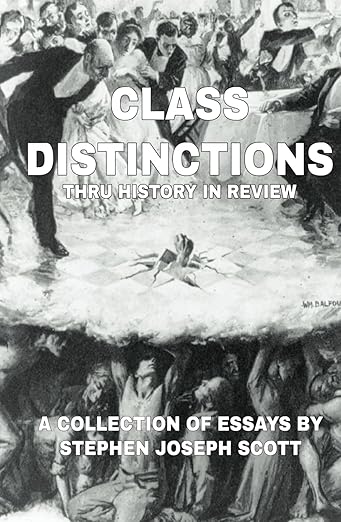
Book Review: Class Distinctions Thru History in Review: A Collection of Essays

With a strong background in history and impressive academic credentials, Scott explores multiple themes on class, race, democracy, and materialism, supporting his narrative with numerous references and quotes.

Book: Class Distinctions Thru History in Review: A Collection of Essays

Author: Stephen Joseph Scott

Genre: History, Non-fiction

Review copy: Author-provided

Available at: Amazon.in

Recommended: Good; Must read for history enthusiasts.

History, as we know it, is gargantuan concealing depths of knowledge that can only be revealed through dedicated research and thematic analysis. In Class Distinctions Thru History in Review: A Collection of Essays, Stephen Joseph Scott delves into the history of class hierarchies and politics, creating a concise handbook for students of World and American History.

With a strong background in history and impressive academic credentials, Scott explores multiple themes, supporting his narrative with numerous references and quotes. Broadly, he addresses:

  • Class and race: Examining how socio-economic status and racial identity have shaped historical events and societal structures.
  • Historical materialism: Analyzing history through the lens of class struggle and economic factors.
  • Revolutionary perspectives: Highlighting the impact of revolutionary movements and figures such as Martin Luther King Jr. and Fidel Castro.
  • Neo-Conservatism: Discussing the rise and influence of neo-conservative ideologies in the 20th century.
  • Slavery and the founding of America: Addressing the complexities of America’s founding, including the institution of slavery.

Scott addresses sagas as old as civilization itself, illustrating how economic disparities continue to grow, with the rich getting richer while the poor struggle to make ends meet. The book emphasizes that, despite progress, racial injustice remains pervasive in society, even within the world’s strongest nations. Scott explores how economic factors shape social and political structures, driving the widening wealth gap that leads to dissatisfaction and dissent.

Both domestic and foreign policies often overlook class-based disparities, either ignoring the issues or furthering the interests of the powerful. These themes are intertwined with contemporary challenges, offering valuable insights into the complexities of modern society. Movements like Occupy Wall Street and ongoing debates about income inequality and racial discrimination are framed within a historical context, enriching our understanding of these pressing issues.

I particularly enjoyed Chapter 7: Ideology and Hypocrisy amid Slavery and Democracy, which investigates historical influences from Ancient Greece that have shaped modern social and economic structures. I was especially intrigued by how Scott dedicates a significant portion of a chapter to analyzing the award-winning movie Green Book. This analysis reflects on how class and racial identities impact our creative and artistic choices. Faced with oppressive politics, creative outlets like books, cinema, and art emerge as a subtle means of expressing discontent.

Chapter 9 presents another interesting essay, reviewing Where the Negroes Are Master by Randy J. Sparks. This work offers valuable insights into the African end of the Atlantic slave trade. Similarly, the analysis of the Preamble of the American Constitution is engaging, and additional essays prompt inquiries about “who benefitted from categorical constructs of race and class” and the “sins of democracy.” Overall, these chapters highlight the complex interplay between art, identity, and historical context in shaping our understanding of democracy and oppression.

The black-and-white book cover visually encapsulates the theme of the work. The split design effectively contrasts the upper and lower classes, highlighting societal disparities throughout history. The juxtaposition of well-dressed individuals at a social gathering against the somber, crowded environment of the lower class powerfully conveys the book’s focus on social and historical analysis.

Overall, Class Distinctions Thru History in Review: A Collection of Essays is a valuable addition to historical and socio-economic literature. Scott’s insightful analysis and revolutionary perspectives make it a must-read for anyone interested in understanding the complex dynamics of class and race throughout history. However, the book could benefit from tighter line editing, as occasional editorial lapses and lengthy sentences may distract readers from the otherwise compelling narrative. The writing sometimes feels weighed down by the significant topics it addresses and the extensive research Scott frequently cites.

This academic collection of essays remains relevant today, critically examining historical events and figures while encouraging readers to reflect on the ongoing impact of class and race in contemporary society. Its strength lies in its ability to challenge traditional narratives and promote a deeper understanding of socio-economic dynamics. Scott’s in-depth work prompts readers to question the status quo and consider the broader implications of historical events.


I received a review copy, and I am leaving this review voluntarily.

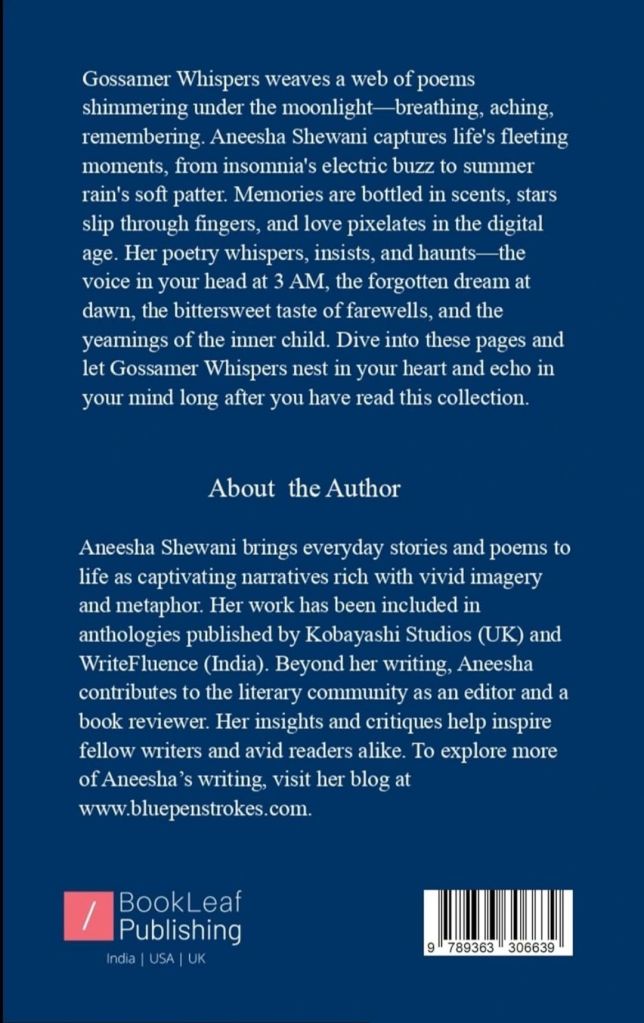
Gossamer Whispers – My first solo poetry collection in print

You’ll find poems that dance between the tangible and the abstract, exploring the alchemy of emotions, the resilience of the human spirit, and the bittersweet nature of memory. From the frosty whispers of winter to the fiery blooms of summer, from the digital realm of modern love to the timeless ache of longing, these poems traverse the landscapes of human experience.

📚✨ Exciting News! 📚✨

I’m thrilled to announce a major milestone in my author journey: the release of my first solo poetry collection 📖 Gossamer Whispers. Available now in both paperback and ebook formats, this book is published by BookLeaf Publishing.

You can find Gossamer Whispers here:
– Paperback: https://amzn.in/d/52Rk7LB
– Ebook: https://lnkd.in/gvN56G_p


Gossamer Whispers is a collection that has been years in the making, born from fleeting moments, vivid dreams, and the quiet contemplation of life’s intricate tapestry. As you turn these pages, you’ll find pieces of my soul scattered like delicate cobwebs across the verses—fragile, yet holding fast to the corners of existence.

I’ve always been fascinated by the power of scent to evoke memories, how starlight can ignite our imagination, and how the simplest moments can carry the weight of eternity. In this collection, I’ve attempted to capture these ephemeral experiences, to bottle them in words as one might capture fireflies on a warm summer night.

You’ll find poems that dance between the tangible and the abstract, exploring the alchemy of emotions, the resilience of the human spirit, and the bittersweet nature of memory. From the frosty whispers of winter to the fiery blooms of summer, from the digital realm of modern love to the timeless ache of longing, these poems traverse the landscapes of human experience.

Pick up your copy today to read more and join this journey with me. 

– Paperback: https://amzn.in/d/52Rk7LB
– Ebook: https://lnkd.in/gvN56G_p


Early reader impressions

I received the book in mint condition. The book is very thin so you might think that you can binge on it and move on to the next book but as you start reading Aneesha’s poetry you realise that it’s written with so many layers of deep thoughts that comes from the mind and the heart. It makes you wonder, ponder. It’s a slow read meaning that you need to read each poem with patience because every word used has been chosen with so much thought that it lingers long after you have finished reading it. Luminescence is one of my favourites from the collection.

“Gossamer Whispers ” is a delightfully engaging compilation of poems. The title of the collection itself indicates how effortlessly the poet leads the reader into the realms of her inner world which means much to her. The images and metaphors used are apt and bring forth meticulously the ideas she desires to portray. The poems point towards her love for nature as she takes utmost care to portray with precision certain minute details. Childhood memories occupy her repeatedly. A major attraction in these poems is the display of a wide array of colors as if she is using her pen as a brush to paint an exquisitely charming picture. Sensuousness adds lustre to her thoughts.

What a beautiful collection of thoughts! Loved the progression from thinking about nature to our daily routine to life-altering decisions.

“Gossamer Whispers” by Aneesha Shewani is a scintillating as well as an engrossing collection of selected poems. Each poem is so captivating that one stops only after ruminating through the whole. The poems encase a wide variety of themes projeceted through remarkable poetic devices. The use of free verse is perfect with Eliotine touch while images, symbols and metaphors abound in every page.A refreshing device is Transferred Epithet which adds to the charm of the poems. Most of the pieces proclaim nostalgia and a sense of loss which, however, provides universality and post mordenism to the collection: lt is indeed a truthful reflection of the contemporary life. Still there are refreshing and sanguine poems like ‘ Summer in Waiting’ and ‘Summer’. Nature abounds in the entire Collection with Adjectival perfection and several nuances of meaning. The Collection is worth preserving to be read again and again.

Book Review: All Kinds of Stupid

Singh’s writing spans five different “Spaces,” each offering a specific type of content—ranging from doodles and journal-style musings to free verses and life lessons.

Book: All Kinds of Stupid

Author: Saheba Singh

Genre: Free verse

Review copy: Fingerprint publication

Available at: Amazon.in

Recommended: Good

A slim volume of musings and free verse reflecting on our modern lives

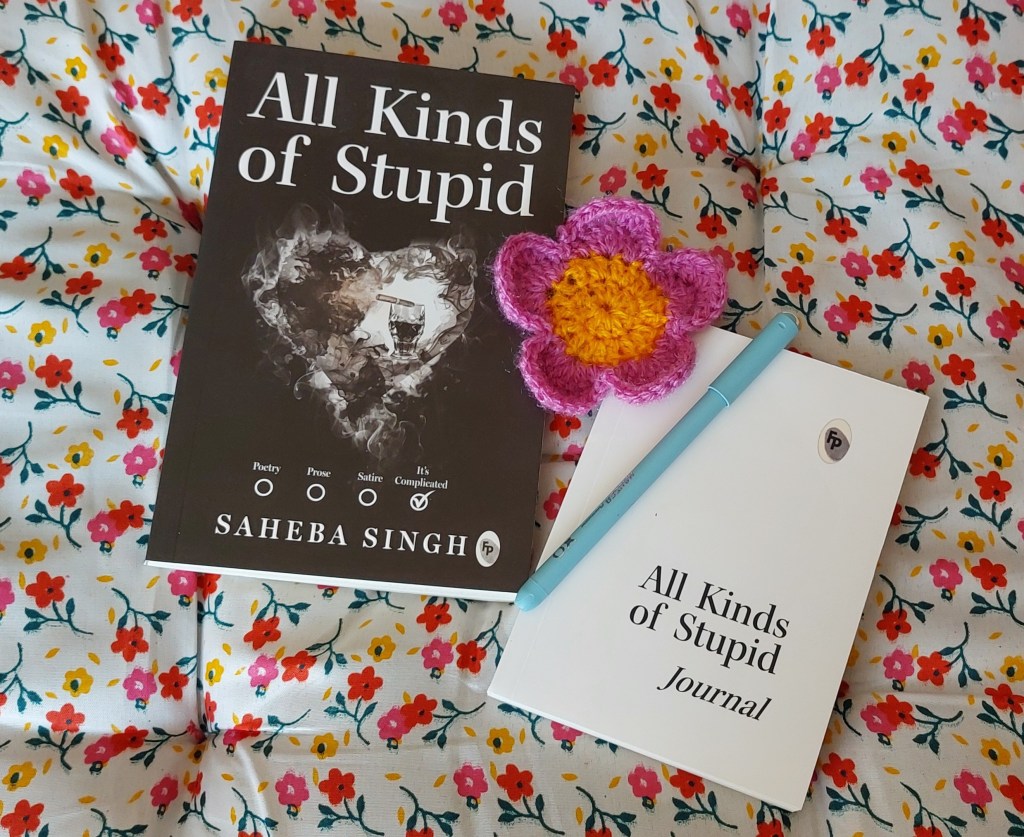
Saheba Singh’s All Kinds of Stupid—with its byline Poetry Prose Satire Complicated—offers a distinctive blend of musings, journaling, free verse, and interactive content. Its unique style seems especially tailored for the social media-savvy Generation Z. The sepia-toned, attention-grabbing cover and fragmented byline reflect the book’s multifaceted tone, calling out to a generation that often tags life and relationships as “It’s complicated.”

The book comes with thoughtful additions: a blank B5 journal and a placard promoting the hashtag #akos. These elements encourage readers to engage actively with the book, flipping through its pages to explore the author’s world and share their reflections. Singh’s writing spans five different “Spaces,” each offering a specific type of content—ranging from doodles and journal-style musings to free verses and life lessons. Readers can choose a Space to suit their mood, making the experience flexible and personal.

The writing is raw and sometimes intense, addressing themes like life, relationships, and existential crises. While not entirely unique in content, some pieces stand out for their poignancy, especially those reflecting on the inner child, daily routine, or nature. Each entry ends with a prompt, inviting readers to ruminate, meditate, and share their responses online using #akos. This interactive approach doubles as a clever marketing strategy and adds purpose to the book, encouraging introspection and self-expression. The inclusion of a pocket-sized journal as an accompaniment is a thoughtful touch, aligning with this reflective theme.

One design choice that proved distracting was the ink blot pattern on every page. In the plain black-and-white paperback format, these blotches sometimes obscured the text, making it difficult to read. A more polished design—perhaps with glossy pages and ink blots in soft blue tones—might have enhanced its visual appeal. While this design choice reflects the author’s artistic sensibilities, it could have been executed more effectively.

Overall, All Kinds of Stupid exudes a comforting and minimalist aesthetic, aligned with its themes of solace and self-reflection. Its interactive elements and unique presentation have the potential to captivate young readers, offering them a refreshing reading and journaling experience. For those seeking both creative inspiration and introspection, this book is a worthwhile pick.


I received an advance review copy for free from Footprint Publications and I am leaving this review voluntarily.