Like strawberries crushed To sweeten marmalade A heart pained Is shred to bits Bitter sweet memories Ruddy peels in jelly mush Sitting still in fragile jars Lingering fragrance Myriad flavors on the lips Fingers now sticky with Soulful tales to spread!
Quite a few stories are narrative in style, imageries piling up, increasingly reflecting the complexity of perceptions. Chan clearly questions, “Has the world always been like this, both insane and chaotic, only he has not seen it as it actually is until now?” This is the theme of the book. Anguished ponderings on the chaos in our minds, purpose, and meaning of our lives, as we try to find a place as friends, lovers, and social beings.
Nonchalant Man
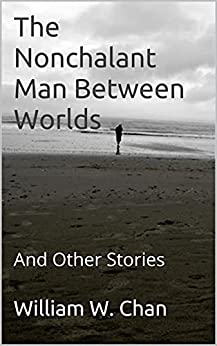
Book: The Nonchalant Man Between Worlds: And Other Stories
Author: William W. Chan
Genre: Fiction, Self-Discovery, Short Stories, Magical Realism
The first story in this collection by William W. Chan, reminded me of Oliver Sack’s work – The Man Who Mistook His Wife for a Hat. Deeper into the book, a Kafkaesque feeling emerged. It is the nature of man to always seek. Some seek answers in science, trying to decipher the mysterious functioning of the brain. Many lean towards metaphysical pondering on the functioning of the heart, soul, and mind.
The Nonchalant Man Between Worlds: And Other Stories are based on this quest, chasing the pertinent question of what’s real in our world and what may lie beyond in other realms. Dreams can be derived from realities and perturb us as much as illusions in waking hours.
The human and anti-human, creatures, demons, evil, fear, all emerge in our thought-scape based on the state of our mind. What happens when something snaps within us and cracks appear in our vision; when the mind is philosophical, the heart is lonely, and the soul disillusioned? Hallucination-based stories like those told by Chan are born.
Nightmares and illusions predominate the stories. Shifting perceptions harass the characters. My personal favorite is, The Fallen, where I sensed a mystery and indulged in a guessing game of who Harold was and his fate. Many of the open-ended stories leave us wondering.
Quite a few stories are narrative in styI can derive dreamsle, imageries piling up, increasingly reflecting the complexity of perceptions. Chan clearly questions, “Has the world always been like this, both insane and chaotic, only he has not seen it as it actually is until now?” This is the theme of the book. Anguished ponderings on the chaos in our minds, purpose, and meaning of our lives, as we try to find a place as friends, lovers, and social beings.
The well-articulated stories are for anyone who has an interest in metaphysical, spiritual, and philosophical notions, motifs, and themes. Interpretation and understanding of Magic Realism shifts from one reader to the next, in fact, one day to another. Such works are not for light readers.
This is a book for rumination and not just about people going about their daily lives. It is for readers who question the happenings and perceptions of their regular existence. It demands attention and offers deep contemplation dressed up as Magical Realism. Keep a highlighter handy for some musings that are worth marking for a later read, as you relate with them.
Far from civilization, in extreme weather conditions, no connectivity, living each day in disciplined rhythm, probably the soldiers also wait for the colourful, boisterous tourists to arrive at their sentinel!
Literally, the last frontier for civilian vehicles, the Zero Point, Yumthang in North Sikkim, just 15 km from the China border, is your chance to see and touch remnants of the winter snow, in the month of June. The area is barren but the treacherous journey is picturesque, the eternal romance of the mountains and clouds changing colors and tactics on alpine slopes. Sometimes you can see the blush of pink mountain flowers, many times the rugged energy of a river breaking down the mountain, rock by rock, stone by stone!
Tourists follow the serpentine rugged roads to reach the cold altitude of 15000 feet. They stand in awe at what is the edge of a certain part of the country and they cross a rickety plank bridge to touch the crumbling snow. In winter months, travelers engage in snow ball fights in rented gear!
Photo highlight – Freezing temperature and the husband carrying snow across the plank bridge, in his hands so that the children could hold it!
Tiny tots like him walk to school on weekdays with siblings, trotting dangerously along the edge. It is scary but they look unperturbed, their cheeks red under the clear mountain sun.
The month of June brings back memories of summer vacations and travels to lands far and fair. In June 2017, our family of 3 went to Sikkim with family friends and relatives. I took notes on my phone, posting them along with pictures on my Facebook page. I bring them out here to share impressions that stay forever.
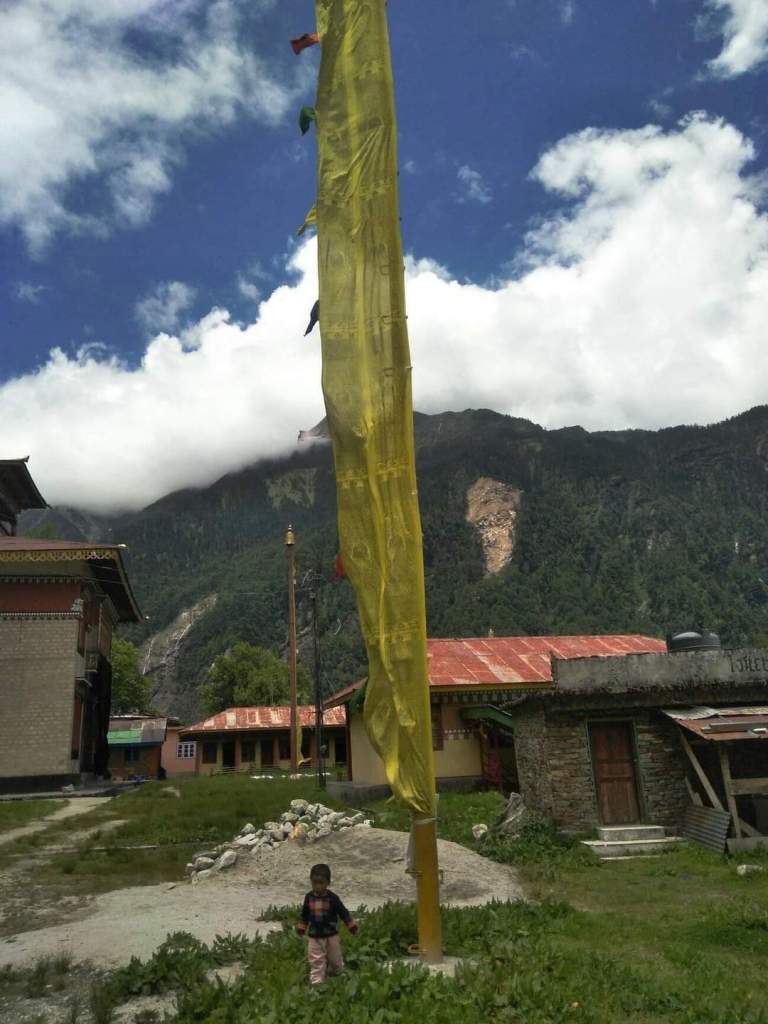
Lachen Monastery, Sikkim
We were soaking in the blue skies, admiring the mountains, and the peace, letting our prayers flutter in the wind, along with the prayer flags.
The fragility of the aged, raciness of the illicit, achiness of nostalgia and aging bones, the darkness of lust, tender cares of motherhood, the inevitability of fading youth, travails of escapism, and troubled demons of haunted pasts – each story is woven to create an elaborate tapestry.
Bombay Hangovers
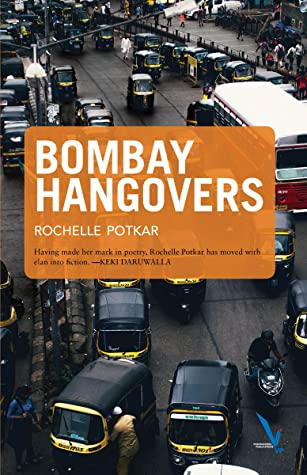
Book: Bombay Hangovers
Author: Rochelle Potkar
Genre: Fiction, Short Stories, Indian writing in English
Our world is made up of stories and most have already been told. It takes an exemplary storyteller to bring life to the mundane and the inconspicuous. Unabashed rendering of exotic yearnings, sensitive descriptions of romantic longings, intense emotions of despair, the gravity of age, trappings of secrets, and a gamut of vast emotions, and scenes flow through the pages of Bombay Hangovers by Rochelle Potkar. The book title is reminiscent of a city, clinging to a past, delving in intoxicating memories of humans, with all their flaws and follies, oft succumbing to the power play of destiny.
Exotic words describe marital bonds from early years of lustful romance to the complacency and frustrations of tired householders. The fragility of the aged, raciness of the illicit, achiness of nostalgia and aging bones, the darkness of lust, tender cares of motherhood, the inevitability of fading youth, travails of escapism, and troubled demons of haunted pasts – each story is woven to create an elaborate tapestry. This is not a leisurely read because it digs into the crevices of fears and passions, dreads and desires, showing us a mirror, bringing to life a society that we ignore. Yet, it pulls you in, word-by-word, page-by-page, as it rips away the facade and unmasks the raw truth pulsating in the heart of Mumbai.
The stories delve into different social classes in the city of Mumbai, as it is now known. Metaphors and analogies embellish the book, revealing research and understanding of the nuances of geometrical terms, workings of a cotton mill, the Goan real-estate, the dhobi ghat, the underbelly of city life, just to name a few. Details are rendered with care, without haste, each word conjuring imagery, sometimes leaving you embarrassed, mostly engrossed. The no-holds-barred flourish of a bold pen takes you on a breathtaking journey into the lives of ordinary men and women.
A few typos are glaring, a sudden shift in the person of narration is disconcerting, and you wish these were not there. Amidst all the beauty of the words, I felt the writing could have been tauter in some stories. Some descriptions could be less superfluous, allowing the reader to savor the exquisite composition and leave some space for musings. The comparatively shorter stories are my favorite in this collection of 16, as they are the most impactful. The introduction is exquisitely written though it contains insights into stories so you may want to read it after diving into the book.



 Blue Pen Strokes