
Book Review: Like the Radiant Sun

Like the Radiant Sun

Book: Like the Radiant Sun

Author: Anu Kay

Genre: Mythology, Magical Realism, Fiction

Review Copy: Himalayan Book Club

Available at: Amazon.in

Recommended: Must Read!

Anu Kay’s novel, Like the Radiant Sun, is an engaging tale spanning a plethora of themes. It is a thriller full of suspense with the mild aroma of a romance playing out in the foreground of a mystical, mythological drama. It has the feel of a Bollywood movie and the enticement of a well-researched and rendered novel. 

Is it destined or planned that a precious, ancient text lands in the hands of an archaeologist, Rohan Sharma? He is just the man to appreciate, interpret, and preserve the words, outlining a rare discipline of combat with esoteric origins. But is he also the man who embodies the physical and mental prowess to outsmart the baddies desperate to lay their hands on the Marma Kala, an ancient manuscript on martial arts?

In the background of this intellectual pursuit lurks a gruesome mystery of a dead priest and a woman in dreadlocks. On this premise, the writer builds a fascinating story oft intercepted by quotes and passages from ancient Indian texts. The book has a fast pace and yet finds space for some attractive imagery, such as, “With cracks of thunder, rain followed like a torrent, whipping up the angry waters of the river.”
Image Source: https://www.anu-kay.com/

Mysterious people across some significant places in India – Varanasi, New Delhi, Kerala, and the revered Mount Kailash – pursue the protagonist. The writer brings out the mesmerizing charm and history of these places. She calls Varanasi, “a magnificent amphitheater of a bygone era.” She draws up pictures with words. For example, there is a scene of a person draped in a red shawl, spurring his black horse through the hills of a spice plantation, as dark clouds loomed.

There is occult, bloodshed, suspicious characters, and a narrative that keeps you on the edge. References to mystical symbols, seals, ancient arts and medicine, and mythological tales embellish the story. When you are reading fiction but bookmark items for further research, the writer has successfully captured your attention.

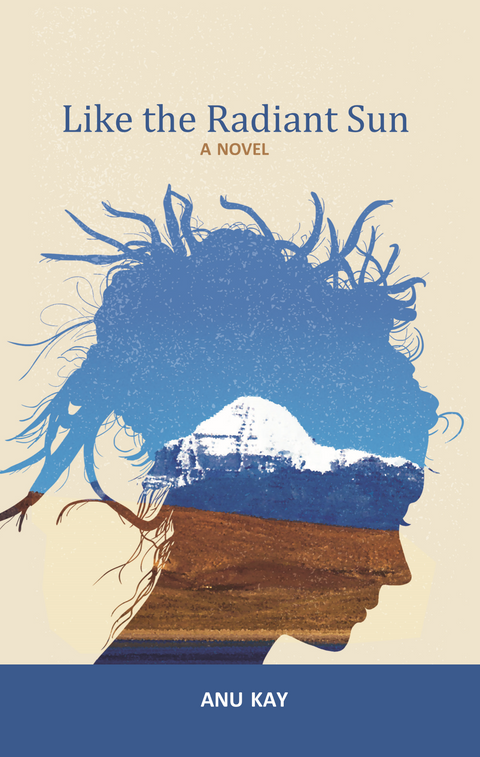
The language is polished and carefully edited, which makes the reading smooth. The characters are well-fleshed out. Their backgrounds are well-enunciated to make it easier to grasp their intentions. The book cover art speaks to the theme of the book and outlines a significant character. I felt the book title could have been more imaginative and alluring. As a lover of historical and mystical stories, Anu Kay’s work provides me with a fine piece of fresh and engaging literature that truly brings out the charm of our Indian heritage.
Book Review: Bloodstone: Legend of the Last Engraving

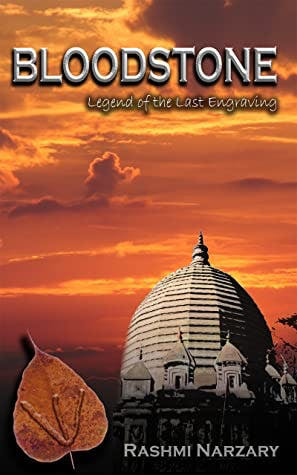
The book brings forth deep research and impeccable imagination. The author’s personal experiences come alive in descriptions of the Kamakhya temple rituals and the religious fervor during the autumn worship of the Goddess. The exotic yet demanding terrain of the hills of Nepal is the backdrop of the tale of a simple village couple that breaks free of the shackles of matriarchy to redefine their fate. It is the story of motherhood – earthly and divine – always alive in mythology, legends, but most importantly in human faith.

Bloodstone

Book: Bloodstone: Legend of the Last Engraving

Author: Rashmi Narzary

Genre: Mythology, Historical Fiction, Fiction

Review Copy: Himalayan Book Club

Available at: Amazon.in

Recommended: Loved it!

Author Rashmi Narzary entwines the fascinating customs of the Kamakhya temple in the Nilachal hills of Assam, India, with the spectacular tradition of the Kumari Goddess in Tilibham, Nepal. In a fictional story that blends mythology and history, legends and existing beliefs, she creates an intriguing narrative centered around the Mother Goddess in South Asian culture. Across the snowy climes of Tilibham, a story blossoms out of loss and yearning, and like any tale of utmost passion and longing, it stretches beyond time and space to remind of the power of sadness to change destinies. The plot arc curves over this canvas. Conflict brims even after 3/4rth of the narration. Anticipation of the resolution makes the book unputdownable.

The book brings forth deep research and impeccable imagination. The author’s personal experiences come alive in descriptions of the Kamakhya temple rituals and the religious fervor during the autumn worship of the Goddess. The exotic yet demanding terrain of the hills of Nepal is the backdrop of the tale of a simple village couple that breaks free of the shackles of matriarchy to redefine their fate. It is the story of motherhood – earthly and divine – always alive in mythology, legends, but most importantly, in human faith.

Is this book prophetic? Read what the author thinks.

BLoodSTONE: LEGEND OF THE LAST ENGRAVING

It is also the story of love that transcends eons – of God Shiva, who mourns his beloved Sati and a Goddess, who must be reborn to fulfill the yearning of divine lovers. The book will make you crave more. Like me, you may seek more information on the traditions so exquisitely detailed. Divinity dwells in humanity that incessantly seeks it out; humanity survives in a deep faith in this power of the esoteric.

As a reader, I was mesmerized by the story. As an editor, I found the book lacking. It starts with repetitive text and descriptions that can be discouraging. After initial reluctance, one forges ahead into the enticing landscape of a wondrous story. The script demands a thorough edit as the repetitive information is distracting. The book would have sparkled with a crisp and concise approach, leaving more for the reader to imagine and savor, long after, the legend of the bloodstone reveals itself.

Book Review: Monet & Oscar

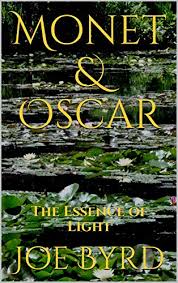
A young American, the son of an accomplished landscape designer in San Francisco, returns to his country of birth to fight for France during World War I. Recovering from battle scars after the war, he finds himself in the employment of none other than Claude Monet. From here begins an enthralling tale of history, flirtations, love, passion, art, and personal quest.A young American, the son of an accomplished landscape designer in San Francisco, returns to his country of birth to fight for France during World War I. Recovering from battle scars after the war, he finds himself in the employment of none other than Claude Monet. From here begins an enthralling tale of history, flirtations, love, passion, art, and personal quest.

Book: Monet & Oscar: The Essence of Light 

Author: Joe Byrd

Genre: Historical Fiction, Drama, Romance, Fiction

Review Copy: Reedsy

Available at: Amazon.in

Recommended: Must Read!

A young American, the son of an accomplished landscape designer in San Francisco, returns to his country of birth to fight for France during World War I. Recovering from battle scars after the war, he finds himself in the employment of none other than Claude Monet. From here begins an enthralling tale of history, flirtations, love, passion, art, and questionable past choices.

A pot-pourri of references to American, Japanese, and French culture merge in a storyline that navigates the life of Monet and Oscar. Japanese wood blocking, landscaping, gardening, Impressionist art to Monet’s illustrious life as a painter, Joe Byrd has written an enchanting historical fiction. The author’s passion for the subject and meticulous research of 30 years gleam through engrossing narration.

The reader must sit back and relish the charms of the cobbled roads along the Seinne, Vernon, Lyon, and Giverny, the fresh sea air, the architecture, the train rides, the walks and picnics, the nostalgia, references to French couture, and the delicate as well as exquisite culinary delights of the time. Monet’s garden is described as “…the best private Garden in France, perhaps in all of Europe.” Amidst all this beauty, we have a young man brimming with questions and an aged, sometimes “gruff” and “grouchy” artist on a journey of reminiscence. 

The book offers insight into people, their hardships, but most importantly about relationships that evolve amidst eccentricities and awkwardness. The characters have a connection that runs far back than they have personally known each other. Intrigue and questions fill the pages. Even halfway through, the conflict and the suspense do not become blunt. Oscar’s passionate liaison with a young lady has a Mills and Boons feel to it. 

I am glad to read this book and recommend it to all lovers of historical fiction and Impressionist art. It reminded me of another of my favorite historical fiction – Girl With a Pearl Earring by Tracy Chevalier. The chapters flow seamlessly, introducing new characters, adding layers to a fascinating tale, intercepted only by the evocation of picturesque surroundings and the confusion and pining of a lonely, young man. Drama, romance, mystery; you have it all in a well-edited book with eloquent prose. Sample this – “The stalks were months from bowing their heavy heads with the weight of golden grains of harvest time.” Want to read more? Grab your copy.

Book Review: Brainstorming with Da Vinci

The content is succinct and well-structured; all points neatly stand out with appropriate formatting and as lists. Chapters are not overwhelming in length but pack a punch. It is a book for a deep-dive; it is a book for reference. It is the perfect material to quote in your next TED talk or podcast. It will inspire you to brainstorm, making it an effective companion guide.

Book: Brainstorming with Da Vinci: An Entertaining Approach to Lead and Inspire Teams to Generate Big Ideas

Author: Eric Bowe

Genre: Contemporary, Nonfiction, Business Management

Review Copy: Reedsy

Available at: Amazon.in

Recommended: Must Read!

I picked up Brainstorming with Da Vinci for its fascinating title and was not disappointed by my choice. Brainstorming is a term mostly flung around corporate boardrooms and big organisations riding the trend of innovation and acceleration. However, Eric Bowe highlights that brainstorming is not limited to business or science etymology. The term has significance in various facets of life, including poetry, art, and music. 

Leonardo Da Vinci is an appropriate poster boy for the skill of deep thinking and execution, with an eclectic personality and curiosity in myriad subjects. The writer encourages that the medium does not matter and even dreams that fail can be instrumental in success. 

The book premise is how an intellect like Da Vinci may have used brainstorming as a tool in an illustrious and creative career. There are insights into the thinking process and methods of some of the most artistic and adored people we know – Lady Gaga, Mick Jagger, Jay Z, Stephen King, Dean Koontz, Carrie Fisher – the list and areas of influence goes on. This lends the book an invigorating and interesting flavor.

The content is succinct and well-structured; all points neatly stand out with appropriate formatting and as lists. Chapters are not overwhelming in length but pack a punch. It is a book for a deep-dive; it is a book for reference. It is the perfect material to quote in your next TED talk or podcast. It will inspire you to brainstorm, making it an effective companion guide.

The writer has put a lot of thought and effort into this work. He has enjoyed the process. Delightful concept names encompass twenty methods and nine guiding principles to make ideas actionable. Want to know what is a “midnight moment” or an “intellectual sherbet”? Have you ever pondered about the optimum number of people in a brainstorming team and session duration? Well, this and much more are available in this brilliant book!

Bowe’s vast experience says that even a bad idea has potential if treated with expertise and indulged with best practices. You may find suggestions and methods that you vaguely know or have used. However, having a host of ideas, neatly laid out in this concise text form, is the effective refresher course you need. Before you capture your next thought, grab this book, and get an insight on how to brainstorm just right.

Book Review: The Eight Crafts of Writing

The Eight Crafts of Writing by Stefan Emunds is a must-have on the bookshelf for anyone who wants a succinct reckoner for basic principles of good writing.

Eight-Crafts-of-Writing

Book: The Eight Crafts of Writing

Author: by Stefan Emunds

Genre: Nonfiction, Contemporary, Writing Craft

Review Copy: Reedsy

Available at: Amazon.in

Recommended: Loved it!

As a writer, this book grabbed my attention with its title. The Eight Crafts of Writing by Stefan Emunds is a must-have on the bookshelf for anyone who wants a succinct reckoner for basic principles of good writing.

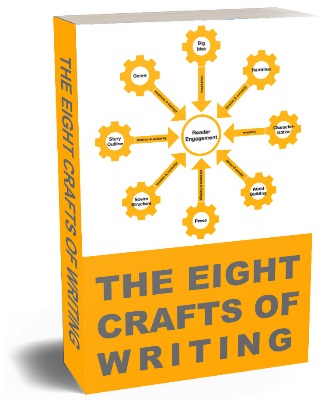
Presented in a crisp format, the book provides a comprehensive map to navigate the writing jungle. Writers are often distracted by the tools of the trade, the multitude of best writing practices, advice on, and criticism of the styles. They tend to miss the overall picture. They forget the joy of creating art.

Nuggets of wisdom, easy to recall definitions, and a simplistic view of concepts are the cornerstone of this guidebook. It brings forth brief comprehension of elements of creative writing that we think we know but may not have clarity. For instance, defining a story as a genre or distinguishing a fictional piece from a nonfictional one. It talks about the techniques that convert big ideas into a masterpiece.

I realized the value of this book as I delved deeper. This is not a one-time read. It is reference material; a textbook. Highlight the nuances, make notes in the margins, view the online material, and memorize the definitions. I recommend it as a must-have for every student and pursuer of the craft of writing. Simple diagrams support the narrative. Links to external material like videos and articles enhance the reference power of the content.

Each page will draw you in, as you consume it. It’s virtually a tome because not a word is wasted; not a sentence is vagrant. It’s packed with a punch, a solid dose of learning in every single line. Read the whole book in a go or pick up a section and ruminate. You must also access the website – https://www.eightcrafts.com for additional learning through maps and articles. This is a masterclass in a book!