Analysis of the art of reading
Blogger, Tom Johnson, of the I’d Rather be Writing blog recently experimented with reducing his smartphone usage and filled that time with reading. He shares some interesting views in this latest post. I made notes that ended up becoming observations worth sharing.
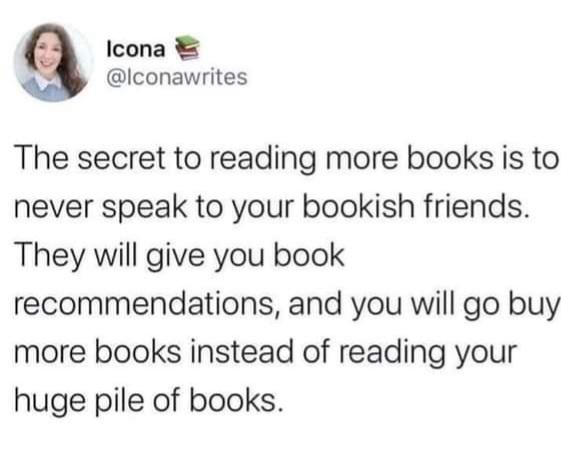
- “Queuing up books” – Been there, still doing it. My eBook library has books for seven lifetimes. Every time I read a good review or hear a recommendation, I grab a copy. The reasonable pricing of eBooks makes piling on the reading list relatively easy. However, looking at the ever-expanding reading list can be stressful. Often, I have this urge to give it all up and just wade through that enormous shelf.
2. “The problem is that my interests evolve from book to book.” This, I believe, is not the problem but the “power” of reading books. It opens new thought vistas and encourages questions. Someone asked me the other day what kind of books I read and my response was “anything that holds my attention.” My taste has increasingly shifted from fiction to nonfiction but I can also devour Calvin & Hobbes or Garfield, cover-to-cover, any time of the day. Reading variety changes the mood and widens our knowledge.
3. “….I decided it wasn’t worth slogging through.” It took me some mental reconditioning to accept that some books are not worth the effort, and some are good in just bits and pieces. I still find it a difficult decision but I have started rationalizing skip-reading and not making it a battle to finish a book that I don’t want to. Tom talks more about this in the section, “Can I skip ahead when bored?”
4. “Buy print versions of audiobooks I enjoyed?” – It’s a personal choice but audible formats don’t hold my attention. Audible versions keep me hooked to my smartphone, which is counterintuitive to the act of reading. I also miss making notes and highlights. I love physical books and buy many on impulse, however, I usually end up with the Kindle version for convenience.
5. “For me, part of the reading experience involves interacting with the book through these annotations. Writing in a book destroys it for resale, but I consider that part of the cost of reading.” – I try to keep my books clean and find a local library to donate or share it with a friend. However, the desire to annotate is as real as Tom describes and this makes eBooks an appropriate choice for me.
6. “I dislike Kindle entirely. Reading from screens is the worst.” This is a universally debatable notion since the birth of the eReader. The eInk technology and the disconnect from any other app or truly workable web access, differentiate a Kindle from a typical screen. I love my Kindle Paperwhite because it powers a more immersive reading experience and is more portable with anytime-anywhere reading. Tom also talks about “How to remember words I look up?” For me, the Kindle highlights and dictionary lookup work well to create a mental map. I can easily search and refresh my memory.
7. “Is reading expensive?” – This is subjective and depends on the format as well as a source of books, for example, libraries, free or discounted eBooks, or used book stores. However, any hobby or pastime involves a monetary angle.
8. “I do think writing reviews would be a good skill to develop, though.” – As a regular book reviewer, I agree with this. It has helped me in developing critical analysis and vocabulary, paraphrasing, and writing in engaging ways. It enables me to pay back to the community of writers, especially self-published, by spreading the word about their work. Book reviews are a beautiful thing to do – for the self and the authors.
9. “Reading is a natural precursor, even a requirement, to writing.” – Always! The more you read the better you write and that’s true for self-review or edits in one’s own writing. The work evolves with each iteration.
10. “What value do non-technical books have on a technical career?” I am glad that Tom raises this question about how book reading as a hobby can help in our technical writing profiles. Well, content strategy, paraphrasing, minimalism, understanding audiences, and trends, are all skills that grow as we expand intellectually. As Tom says, “Perhaps reading helps prime and tune my intellectual engine, which then makes me more capable in performing other tasks (even in writing documentation).”
I enjoyed reading Tom’s article and crystallized my views on the wonderful hobby of reading. Tom’s article has many more points to ponder, for example, is reading passive or are book clubs worth the time. You may find your takeaways or rediscover the lost art of reading. At the end of it, don’t forget to grab a book.



 Blue Pen Strokes