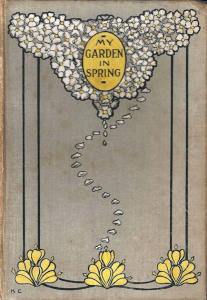
A window of thoughts Hidden behind creepers Ruffled by the rustle Of leaves and critters And a faraway breeze Carrying your perfume Placing it naughtily in the Sweet center of a Jasmine
It’s summer time and the Jasmine vine shrubs are in full bloom. Their gentle aroma fills the air almost always carrying memories from afar. This poem is also inspired by the book cover for E. A. Bowles. My Garden in Spring. London: T. C. & E. C. Jack, 1914 — Source. Cover design by Katherine Cameron
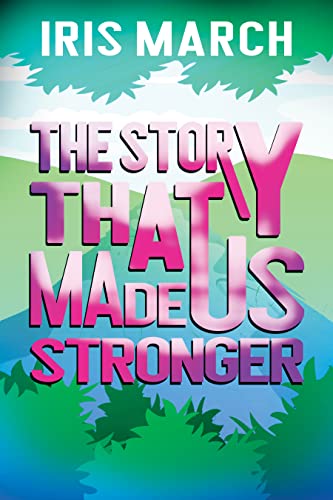
A book that reverberates with hope and the power of goals to keep us going even in the face of challenges.
The Story That Made Us Stronger by Iris March is a novel that glistens with hope and sparkles with the endurance of the human mind and body. It’s a bittersweet story told from the viewpoints of a nurse and his patient, who is undergoing treatment for cancer. A mysterious building with an unknown past draws them together into a bond as they both seek to achieve their goals.
As Connor Jackson goes around investigating the building that attracted his attention during his daily runs, Katie Brandt finds a diversion in his reports to learn more about the abandoned structure. Connor is her window to a world that is becoming increasingly distant as she struggles with the impact of cancer treatment. Connor has a loving extended family but he has inner battles and preparing for a marathon is his way to find purpose in his life beyond work and family.
This story is about compassion and a journey of healing. The tenderness of Connor as a nurse and Katie as a young mother fighting to get well for her family is the central theme of this book. However, the more exciting bit is the mystery of a rundown building with a strange pole. This part keeps the story moving along and connects the reader with Connor and Katie’s journey. In the storyline about the building, I see a metaphor for the unknown that we always seek to unveil, to understand, and the mission that keeps us going on each day. We all need a mystery to pursue because sometimes what we go through in our mundane existence is too hard on us.
A book about illness, particularly about cancer can be melancholy but the writer brings to us Katie’s struggle in the least overwhelming way possible. There is a distinct warmth flowing through the pages of the book – a subtle energy that pulls at your heartstrings, and the promise of a mystery that you want to solve. The narration is smooth and balanced. It includes cancer information and its treatment. Connor and Katie’s experiences are entwined in the pages of a book where there is a thrill, a budding romance, and most importantly hope. This book brims with humanness and is an endearing read. I highly recommend it for a gentle summer evening or a bus ride home.
Today is Day 1 of the National (also Global) Poem Writing Month of 2023. This implies challenging oneself to write poems and verses daily for 30 days. So, as I kick off day 1 on my blog, here is the official NaPoWriMo site link and also the prompt inspiration they provide. I am hoping to cover all of these book cover designs during this challenge.
And here’s our own prompt (optional, as always) for the first day of Na/GloPoWriMo. They say you can’t judge a book by its cover, but they never said you can’t try to write a poem based on a book cover — and that’s your challenge for today! Take a look through Public Domain Review’s article on “The Art of Book Covers.”
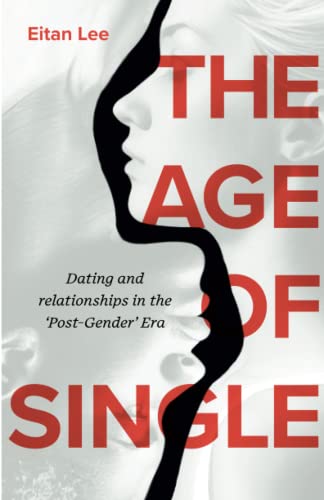
A fascinating read for those A research-based discourse on why youngsters prefer to be single and the impact it has on our social and economic fabric.
The Age of Single is a fascinating social commentary backed by historical and literary facts. The text is supported by graphs and tables and embellished with relevant images. Author Eitan Lee has encapsulated a vast array of research. Single, as a term, in this book refers to individuals unattached by the legalities of matrimony. A single person may be in a relationship or cohabiting but not married.
The contemporary phenomenon of singledom is not as modern as we may think; Lee traces its origins to the “free love” movement of the 1960s. In the background of the Vietnam war and the rise of capitalism, the Hippie movement was breaking all forms of social impositions. The current times are no less different with a multitude of issues defining our social, economic, and ethical priorities.
The Age of Single aims to understand why youngsters are choosing to be single and what it implies on a psychological and economic level. Is “being single” the epitome of happiness, with its promise of independence and free will? Or, “singlism” and emotional complexities make “singledom” not a fairy tale that we assume it to be? The intricate nuances of the relationship status – Single – are brought out in detail in this book through quotes from social media, books, and research papers.
Lee talks about the role of feminist writers like Virginia Woolfe, Helen Gurley Brown, Judith Butler, and classic novels in stoking the independence streak in women and the definition of gender in our times. This book draws up nuggets of social revolution history to trace how we reached where we are today. It talks about the new gender identities and “new gender politics” in the “relationship terrain.”
And, does this trend of unattached relationships have any long-term consequences? Well, yes, it does as Lee continues to inform. From lowered birth rates and child-rearing to declining physical intimacy, “the age of single” is creating several consequences for the coming generation. “Waiting is the new secret norm.” Time slips away as we wait and the wait may be momentarily fulfilling but not necessarily brimming with happiness.
Lee’s book is a must-read for a range of audiences. From teachers and preachers to the young and their parents. Unless we understand the currents that are shaping the life of our youngsters, we can not have relevant conversations about “undoing gender” and “gender-fluidity”, along with the future of marriage as an institution. “In this new reality, we are facing a new range of relationship problems hardly known to previous generations.” I loved the book for its crisp narrative and meticulous writing. It is a breezy yet meaningful reference book.
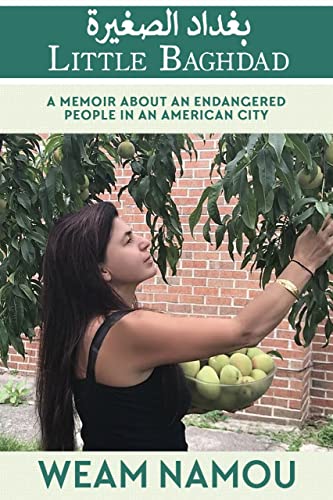
A fascinating read for those who want to know the history of the struggles in our world and about the life of refugees from Iraq.
Writing a memoir is a manifestation of bravery, for one must dig into the deepest crevices and corners of memory to tell an astounding story. Little Baghdad by Weam Namou is one such brilliant effort as it fills the pages with a kaleidoscopic memory scape that is endearing and poignant.
Weam delves into the lesser-known documented history and experiences of the Chaldean Christians from Iraq, who settled in the state of Michigan in the United States. The pages carry the longing and the travails of all who must leave their homeland to seek refuge in distant pastures. The amalgamation and assimilation into a new world is a long and adventurous journey peppered with stories – sweet and bitter.
Little Baghdad is not just a glimpse of the life of settlers from another part of the globe in Michigan, it is also a historical note on the city of Detroit. There is a glimpse of the culture of the Native Red Indians and how they slowly embrace modernity. In the reflections of loss and hope, a young wife, mother, sibling, and caretaker for an aging parent weaves in her professional quest.
Amidst political turmoil and a growing divide based on religion and community, our author, a feminist and flag-bearer of justice, is often disheartened, yet she gains strength in her artistic explorations. Part 2 of the book is a tender testimony of the love that only a child can feel for parents who devoted their lives to finding another haven for their children. It is, then, the sweet burden of the children to do their best to create something worthwhile for the next generation. It’s not an effortless task when time has changed the landscape and people have drifted apart. “Things don’t die, they become shells. Life then continues in different ways.”
From anecdotes related to writing a book or creating a home production to deciphering ancient scriptures and culture, or talking about a quiet evening with the family and its pet, the narration is brimming with memories. The reader can only imagine the writer’s nostalgia as she brings out precious and delicate recollections on paper. The book is bound to touch and inspire the reader in more ways than one as it meanders down memory lane. It would be a treat to see a web series on the vibrant ethnic communities that are documented in this book.

 Blue Pen Strokes