Books, Paper, and Pens

Books were bought with care and cherished; not hoarded into digital spaces because someone recommended the next best-seller. Reading was not competition; it was relaxation.

Rumi

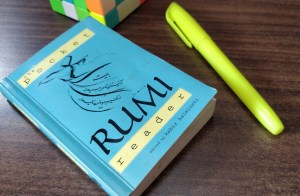
I have a Rumi Pocketbook in my desk, since more than two decades, and once upon a time it gave me much succour. That was before the age of the madness of devices. It moved around with me one house to another, packed in boxes. Then, it lay quietly in a drawer, waiting, holding words of wisdom in it’s bosom, until my 11-year old son retrieved it and asked if it was age-appropriate for him to read! My heart overflowed with joy!

It is important to have books in the house – hardcovers, paperbacks; diaries, 📒 notebooks and stationery – little treasures, waiting to be discovered. Let your children unearth the bounty, find solace and refuge in the power of the written word. My son writes in his little Harry Potter themed journal or blogs only after jotting down ideas in a notebook. He loves glitter pens and gel pens, and no batch of bookmarks🔖 or post-it notes are ever enough. We share our love for stationery and to his credit I have introduced him to the indulgence. I blogged about this earlier also.

Continue reading “Books, Paper, and Pens”

Book Review: Plastic Jesus and Other Stories

Beautifully written stories, capturing the essence of myriad people and their worlds, each ending with a twist, oft with a message.

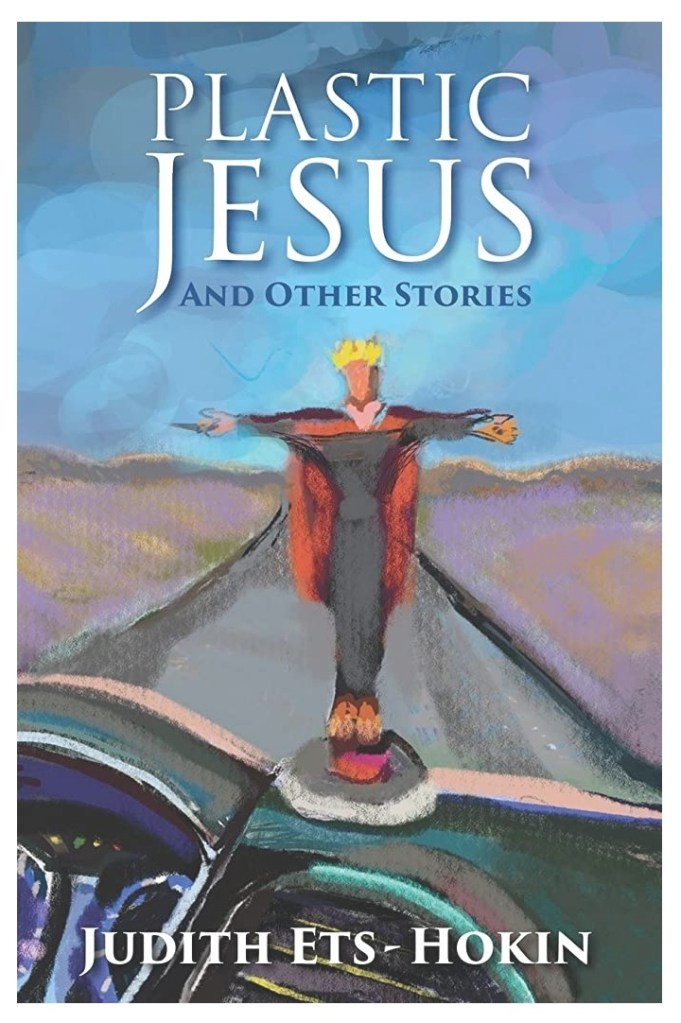
Book: Plastic Jesus and Other Stories

Author: Judith Ets-Hokin

Genre: Short Stories, Fiction

Review Copy: Reedsy.com

We are all made up of stories. A keen observer of life, Judith Ets-Hokin picks up some interesting ones and brings them to us in a collection with an intriguing name—Plastic Jesus and Other Stories. A medley of 13 stories with an array of themes, Plastic Jesus is a good weekend read.

The stories are of varied length, The Hunt, being the longest, and encompass myriad emotions and terrains. The writing is fluid and deep, with intricately depicted scenes, intense characters, and ebb and flow of emotions showcasing linguistic penchant.

The author breathes life into inanimate objects and nature, but mostly exhibits insights into human emotions. Love, loneliness, grief, loss, fate, ambition, smugness, doubt, independence, self-sabotage, virtue, vice, urbanization—the shifting sands of the stories keep you engaged, as you turn the pages of this slim book.

A story may be open-ended or conclusive, but resist the temptation to hasten to the end; capture the essence of the tapestry of words. I enjoyed a guessing game while navigating the pages, as each character and their space is sensitively worked upon. The first story is my favorite with its element of suspense. In a couple of stories, I felt the ending was predictable and similar.

The joy of the ride is in the beautiful writing; in the delicate balance of saying more in fewer words. Humans are oft in conflict with themselves or with others as they fight for the rights of people and animals. Stories that leave you wondering, fill you with suspense, or grief, or make you wonder—all tightly packed with crisp and meticulous writing.

The storyteller in Judith Ets-Hokin invokes thoughts and weaves in magic, figuratively and literally. She moves around in different walks of life, manifold worlds, myriad people, thus creating stories rich and fulfilling. Special applause for the artistic book cover. Grab your copy for stories—long and short—and enjoy a perfect reading weekend.

Book Review: The Emperor who Vanished

The book has good font size, smooth language, and dives into anecdotes and information from history, art, and architecture. A great memory refresher for adults with a few new facts and a wonderful book to make the children interested in our rich history, monuments, and the wonders of ancient times! I recommend this book for 10 years and above readers and even as a bedtime read for younger children.

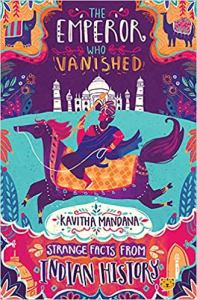
Now, that I am building my 11-year old son’s library, I am getting to read some great children’s/young adult fiction, and rediscovering forgotten facts. Kavitha Mandana’s The Emperor who Vanished is a book that introduces Indian history, art, and architecture in an interesting manner. This book is relevant for children in middle school because this is the time they are discovering more about India’s rich heritage and culture in their school curriculum.

The book has good font size, smooth language, and dives into anecdotes and information from history, art, and architecture. A great memory refresher for adults with a few additional facts and a wonderful book to make the children interested in our rich history, monuments, and the wonders of ancient times! I recommend this book for 10 years and above readers and even as a bedtime read for younger children.

Rating – 4/5. A star less because my son did not enjoy the fictional bit about the two students embarking on a school project. I also felt the language was not taut in those sections. The characters were not flushed out and the attempt to create a funny and engaging storyline was not exactly accomplished. Even without focussing on the story of Apu and Nina, the book is worth a read.

The Myth of Great Leadership

This is also highlihted in Susan Cain’s book, Quiet, where she says that modern boardrooms should leverage the strengths of introverts, including complex problem solving, deep thinking and strategizing. Interestingly, in the first few pages the author narrates an incident where the introvert had to do the hard-sell talk and negotiate. It is not that introverts cannot talk; it is not that they are shy; they are observant, they are unassuming, and they are great listeners.

I have worked in a couple of different industries, company sizes, and, of course, different roles in my career, spanning 2 decades and counting. My observation is that in maximum cases, the ones who can really talk and hog the space in a meeting or a forum and be charming enough to indulge peers and seniors alike, are the ones who reach the top management levels faster. Smooth talkers, smooth operators are definitely liked by all and are the light and life of any organization. People adore them. Fair enough!

The disparity arises when they are only talking and take less action, and have even lesser in-depth knowledge, primarily because they think they know it all. As avid speakers, who love the sound of their voice, they are also poor listeners. Winning through speech becomes their hallmark, even a considerable part of their professional ego, and rise thereof.

In contrast, the silent slogger does most of the work, spends time researching, learning, listening, ruminating, bringing out thoughts and ideas, but if not articulate, then the dias remains a distant object. Often, such people receive appraisals that show them as mild, invisible, non-communicative. Interestingly, they are also trusted with the workload and called upon to deliver.

This is also highlighted in Susan Cain’s book, Quiet, where she says that modern boardrooms should leverage the strengths of introverts, including complex problem solving, deep thinking and strategizing. Interestingly, in the first few pages, the author narrates an incident where the introvert had to do the hard-sell talk and negotiate. Not that introverts cannot talk; not that they are shy; rather they are observant and unassuming, and are listeners. The top positions may, however, remain elusive until introverts develop and exhibit art of the glib.

This, I believe, constitutes the biggest malady of any organization, bureaucracy, even nations. Until the doers are at the helm of affairs and credited for the work they produce, everything else is smoke, mirrors, mist, and a lot of public relations events. Even at the pinnacle of power and commanding all authority, if one does not govern with compassion, decide with the support of knowledge and advice, administer with competency, and lead by example, the leadership skill is a full-blown myth.

For those interested in understanding and also explaining introversion, especially to children, BBC One in its BBC Idea series, explains the Quiet Power of Introverts in a short animated video.

Nurturing a Young Blogger and Reader

My son and I have much in common – from our introvert temperament to love for reading and writing. Last summer during a long Covid19 lockdown in India, which was labelled by some media houses as one of the toughest, my son asked me about blogging. I explained it was an online journal, diary, or a place to share thoughts and stories and engage with like-minded followers.

I told him I used to blog and can set up a blog for him. That is how I restarted blogging in an all-new blog space, which is this, and he got a brand new blog – www.blackpenstrokes.wordpress.com. What I find endearing is that he still writes his “private journal” by hand. Though, I know it’s more to do with his love for stationery; again something he has acquired from me!

Continue reading “Nurturing a Young Blogger and Reader”