
Book Review: Monet & Oscar

A young American, the son of an accomplished landscape designer in San Francisco, returns to his country of birth to fight for France during World War I. Recovering from battle scars after the war, he finds himself in the employment of none other than Claude Monet. From here begins an enthralling tale of history, flirtations, love, passion, art, and personal quest.A young American, the son of an accomplished landscape designer in San Francisco, returns to his country of birth to fight for France during World War I. Recovering from battle scars after the war, he finds himself in the employment of none other than Claude Monet. From here begins an enthralling tale of history, flirtations, love, passion, art, and personal quest.

Book: Monet & Oscar: The Essence of Light 

Author: Joe Byrd

Genre: Historical Fiction, Drama, Romance, Fiction

Review Copy: Reedsy

Available at: Amazon.in

Recommended: Must Read!

A young American, the son of an accomplished landscape designer in San Francisco, returns to his country of birth to fight for France during World War I. Recovering from battle scars after the war, he finds himself in the employment of none other than Claude Monet. From here begins an enthralling tale of history, flirtations, love, passion, art, and questionable past choices.

A pot-pourri of references to American, Japanese, and French culture merge in a storyline that navigates the life of Monet and Oscar. Japanese wood blocking, landscaping, gardening, Impressionist art to Monet’s illustrious life as a painter, Joe Byrd has written an enchanting historical fiction. The author’s passion for the subject and meticulous research of 30 years gleam through engrossing narration.

The reader must sit back and relish the charms of the cobbled roads along the Seinne, Vernon, Lyon, and Giverny, the fresh sea air, the architecture, the train rides, the walks and picnics, the nostalgia, references to French couture, and the delicate as well as exquisite culinary delights of the time. Monet’s garden is described as “…the best private Garden in France, perhaps in all of Europe.” Amidst all this beauty, we have a young man brimming with questions and an aged, sometimes “gruff” and “grouchy” artist on a journey of reminiscence. 

The book offers insight into people, their hardships, but most importantly about relationships that evolve amidst eccentricities and awkwardness. The characters have a connection that runs far back than they have personally known each other. Intrigue and questions fill the pages. Even halfway through, the conflict and the suspense do not become blunt. Oscar’s passionate liaison with a young lady has a Mills and Boons feel to it. 

I am glad to read this book and recommend it to all lovers of historical fiction and Impressionist art. It reminded me of another of my favorite historical fiction – Girl With a Pearl Earring by Tracy Chevalier. The chapters flow seamlessly, introducing new characters, adding layers to a fascinating tale, intercepted only by the evocation of picturesque surroundings and the confusion and pining of a lonely, young man. Drama, romance, mystery; you have it all in a well-edited book with eloquent prose. Sample this – “The stalks were months from bowing their heavy heads with the weight of golden grains of harvest time.” Want to read more? Grab your copy.

Book Review: Brainstorming with Da Vinci

The content is succinct and well-structured; all points neatly stand out with appropriate formatting and as lists. Chapters are not overwhelming in length but pack a punch. It is a book for a deep-dive; it is a book for reference. It is the perfect material to quote in your next TED talk or podcast. It will inspire you to brainstorm, making it an effective companion guide.

Book: Brainstorming with Da Vinci: An Entertaining Approach to Lead and Inspire Teams to Generate Big Ideas

Author: Eric Bowe

Genre: Contemporary, Nonfiction, Business Management

Review Copy: Reedsy

Available at: Amazon.in

Recommended: Must Read!

I picked up Brainstorming with Da Vinci for its fascinating title and was not disappointed by my choice. Brainstorming is a term mostly flung around corporate boardrooms and big organisations riding the trend of innovation and acceleration. However, Eric Bowe highlights that brainstorming is not limited to business or science etymology. The term has significance in various facets of life, including poetry, art, and music. 

Leonardo Da Vinci is an appropriate poster boy for the skill of deep thinking and execution, with an eclectic personality and curiosity in myriad subjects. The writer encourages that the medium does not matter and even dreams that fail can be instrumental in success. 

The book premise is how an intellect like Da Vinci may have used brainstorming as a tool in an illustrious and creative career. There are insights into the thinking process and methods of some of the most artistic and adored people we know – Lady Gaga, Mick Jagger, Jay Z, Stephen King, Dean Koontz, Carrie Fisher – the list and areas of influence goes on. This lends the book an invigorating and interesting flavor.

The content is succinct and well-structured; all points neatly stand out with appropriate formatting and as lists. Chapters are not overwhelming in length but pack a punch. It is a book for a deep-dive; it is a book for reference. It is the perfect material to quote in your next TED talk or podcast. It will inspire you to brainstorm, making it an effective companion guide.

The writer has put a lot of thought and effort into this work. He has enjoyed the process. Delightful concept names encompass twenty methods and nine guiding principles to make ideas actionable. Want to know what is a “midnight moment” or an “intellectual sherbet”? Have you ever pondered about the optimum number of people in a brainstorming team and session duration? Well, this and much more are available in this brilliant book!

Bowe’s vast experience says that even a bad idea has potential if treated with expertise and indulged with best practices. You may find suggestions and methods that you vaguely know or have used. However, having a host of ideas, neatly laid out in this concise text form, is the effective refresher course you need. Before you capture your next thought, grab this book, and get an insight on how to brainstorm just right.

Book Review: The Eight Crafts of Writing

The Eight Crafts of Writing by Stefan Emunds is a must-have on the bookshelf for anyone who wants a succinct reckoner for basic principles of good writing.

Eight-Crafts-of-Writing

Book: The Eight Crafts of Writing

Author: by Stefan Emunds

Genre: Nonfiction, Contemporary, Writing Craft

Review Copy: Reedsy

Available at: Amazon.in

Recommended: Loved it!

As a writer, this book grabbed my attention with its title. The Eight Crafts of Writing by Stefan Emunds is a must-have on the bookshelf for anyone who wants a succinct reckoner for basic principles of good writing.

Presented in a crisp format, the book provides a comprehensive map to navigate the writing jungle. Writers are often distracted by the tools of the trade, the multitude of best writing practices, advice on, and criticism of the styles. They tend to miss the overall picture. They forget the joy of creating art.

Nuggets of wisdom, easy to recall definitions, and a simplistic view of concepts are the cornerstone of this guidebook. It brings forth brief comprehension of elements of creative writing that we think we know but may not have clarity. For instance, defining a story as a genre or distinguishing a fictional piece from a nonfictional one. It talks about the techniques that convert big ideas into a masterpiece.

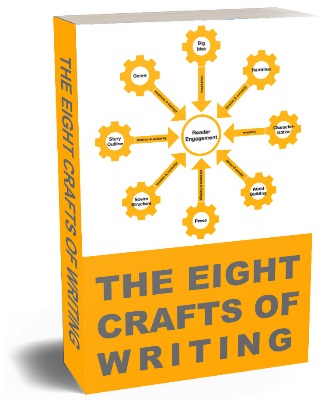
I realized the value of this book as I delved deeper. This is not a one-time read. It is reference material; a textbook. Highlight the nuances, make notes in the margins, view the online material, and memorize the definitions. I recommend it as a must-have for every student and pursuer of the craft of writing. Simple diagrams support the narrative. Links to external material like videos and articles enhance the reference power of the content.

Each page will draw you in, as you consume it. It’s virtually a tome because not a word is wasted; not a sentence is vagrant. It’s packed with a punch, a solid dose of learning in every single line. Read the whole book in a go or pick up a section and ruminate. You must also access the website – https://www.eightcrafts.com for additional learning through maps and articles. This is a masterclass in a book!

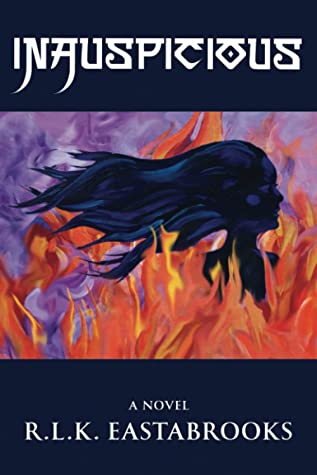
Book Review: Inauspicicous

Book: Inauspicious

Author: Renée L. K. Eastabrooks

Genre: Contemporary Fiction

Review Copy: Reedsy

Available at: Amazon.com

Some aspects of our society and cultural mores are so horrifying that we strive to keep them under wraps. It takes someone with courage, compassion, and empathy to bring forth depraved secrets so that the evil can be ripped apart at the roots. Renée L. K. Eastabrooks pens down the true story of a young widow in Rajasthan, who miraculously escapes the burning pyre of Sati, and goes on to search for a new life across continents. Easterbrook’s novel – Inauspicious – contains insights from her month-long trip to northern India where she worked with widows and street children.

Sati, the practice of burning alive a widow on the pyre of her dead husband, is illegal in India. However, in the hinterlands, the widow is a financial and social burden, and an entire custom is perpetuated to get rid of her while crowning her with divinity. In this horrifying landscape, a young widow, Triti, escapes a lit pyre and through sisterhood and kindness, and the power of her dreams and forte attempts to rewrite her destiny. The novel is gripping from the start and has the reader rooting for the protagonist.

The writer is invested in the local landscape and heritage. The book contains verses, local lullabies, songs, and a few colloquial dialogues. Amidst the sorrow and the depravity, the descriptions of colors, bazaars, spices, jewelry, bring out the visual vibrancy for which Rajasthan is well-known. Eastabrook’s writing is evocative and the observant narrative fills the pages of an otherwise troubling story.

Initially, it seems Triti’s recovery and journey to Delhi and then to New York is not only swift but convenient. A quarter into the book, the 18 years old, Triti, has changed her identity and moved out of the country, only to discover the smoke and mirrors in the world. Her trysts are yet to unfold.

This is a story of sheer grit and the desire to survive, against all odds. From small towns and impoverished societies rise some of the strongest souls who become an inspiration. Triti’s story, even in adversity, speaks of the power of serendipity and the inner strength that can pave the path for redemption and healing if ever there is for those who have experienced the darkest depths of society.

Book Review: Espresso with the Devil

Book: Espresso with the Devil

Author: Thomas Poppe

Genre: Fiction, Self-Discovery, New-Age

Review Copy: Reedsy

Available on: Amazon.in

Must Read!

A title as interesting as Espresso with the Devil keeps up to its promise of being an engrossing read. Tom, a writer, is approached at the airport by Fred, who introduces himself as the Devil. The Devil is worried and he needs Tom to carry his message to mankind. The premise reminds me of two popular renderings on modern television – Lucifer on Netflix and Crawley from Good Omens on Prime Video – and Fred seems as intriguing and entertaining as these televised characters.

Soon, the writer and Devil are engaged in contemporary discourse on the nature and purpose of modern life. The discussions elaborate how the Devil is able to allure humans to go against their basic instincts and indulge in complex and artificial living that exacerbates the struggles of humanity.

The onslaught of technology diminishes mental faculties. Ease, convenience leads to decay. As fake news, deep fake, permeate our lives, the conscientious can identify the perils of idolizing achievers and creating role models, without knowing the whole truth.

The discussion delves into the competition, materialism, commercialization, scientific and medical advancements, as concepts that imply success but actually are instruments of destruction. Harmony and equality perturb negative forces, hence, rivalry and envy are created in the Devil’s workshop.

The contemplation provides advice to free oneself of the rat race and reclaim the simplicity of a hard-working life for a fulfilling existence. Impulsiveness in thought and action, quick fixes, and striving for the luxurious lead to many of our daily and long-term problems. These are just some of the intriguing topics touched upon in this engrossing read.

The conversation is light, yet the message is deep. A book to be relished in one go and then picked up in moments of deliberation, making an impact one passage at a time. It is a self-help book but for humanity. It puts in words all our scattered thoughts on what is wrong with our world.

Practical insights, spiritual messages, anecdotes, and Devil Hacks may help us reset, recover, renew, or leave us wondering at the impending fate of humans. A book that makes one think is worth the time and attention. I am glad to have discovered it. It pulsates with the anguish of our modern lives and how we are in self-destruct mode. Is there a way to turn away from the abyss? Let the book reveal.