
Book Review: A Million Things To Ask A Neuroscientist

Book: A Million Things To Ask A Neuroscientist: The brain made easy

Author: Mike Tranter

Genre: Teens and Young Adult (13+), Non-Fiction, Science, Neuroscience

Review Copy: Reedsy.com

Also available at: Amazon.in

When the first word in a book is as casual as OK, you wonder if it is of any merit. A quick walk into the preface and you realize the power of this book is in its simplicity. A deep-dive and you are engrossed in the complex world of the brain but in a fun way through this book.

A Million Things To Ask A Neuroscientist – the brain made easy is listed for ages 12+ but I would recommend it for at least Grade 9 and above. Written in a succinct style, it contains some scientific terms that may disengage a younger reader. For anyone into the basics of the science of the brain and fiery neurons filled with questions about how this super organ works and controls the human body, this is one fascinating read.

Mike Tranter, a neuroscientist from the UK, living in California, embellishes this book with some easy diagrams and a lucid style that maintains the depth of the subject but with an informal tone. Complex neuroscience mechanisms are explained with daily life examples. As an avid reader of books related to the brain and the unknown areas that are still waiting to be discovered or fully explained, I found this book to be informative and engaging. From learning about the brain-blood-barrier to the fact of neurogenesis, it draws you into the captivating world of grey and white matter.
The text centers on positive messaging, as it talks about the effect of drugs, addiction, withdrawals, depression, social coupling, the power of learning languages, and recovery after injuries, amongst other things. It is almost like being in an exciting classroom with an amazing teacher who brings the subject home.

The concepts discussed are as intriguing as the brain itself – from lucid dreaming to nightmares, dream incubation and dream prophecy, fear, memories, intelligence, to whether scientists understand how anesthesia works, to the question of whether memories can be transferred to a device using technology. It touches on esoteric aspects of consciousness, meditation, syndromes, and a pertinent query – are male and female brains different? This is just 2/3rd of the book content – there is more to learn and know – so grab a copy!

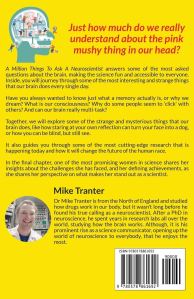
This book is a thrilling ride and literally food for thought. It does not answer all the teeming questions, for example, I wanted to know about migraines. Well, it is a book that deserves a sequel. The cover design is bright and inviting, and the content is worthy of your time and attention. For more insight, read Mike’s article on why and how he wrote this book.
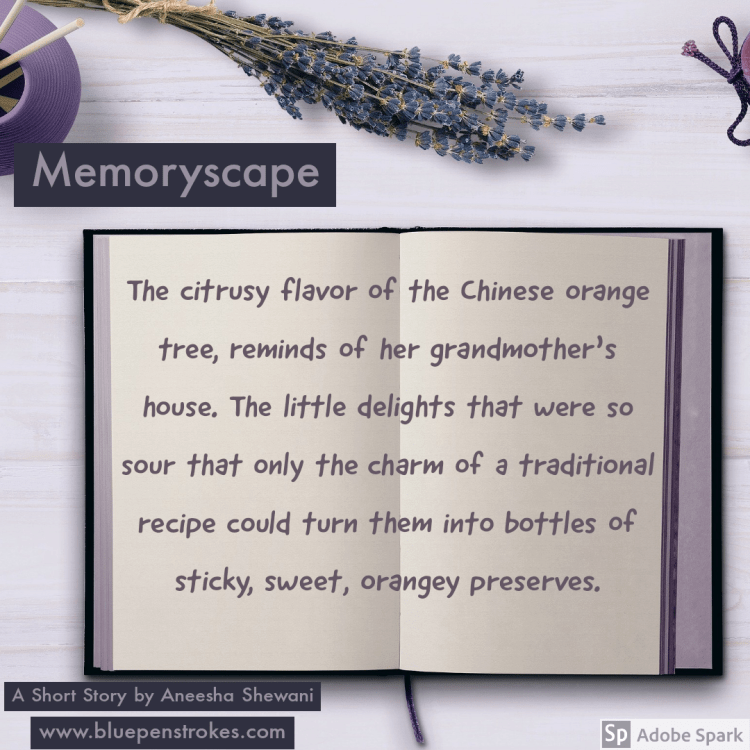
Memoryscape

Memoryscape

They say sights make lasting memories and a touch imprints forever. However, it was the smells that lie splattered across her memory-scape. This story traces an olfactory journey of a lifetime as she put pieces together, wondering what lies next.

1980 – It is the smell of soap – an expensive luxury bar of white soap. The silhouette of a man with that soapy fragrance is still vivid. She was barely 3-years old. She can recognize that smell anywhere but does not come across it often. She cannot remember who he was, yet the distinct memory captures her. 

She frets that she needs to dig deeper into the recesses and find out why the fragrance of that soap and the man are so alive in her mind even after 40 years. There are no answers; she does not even know whether that time was good or bad; whether that memory points to any event in her life. The lack of an answer makes her uncomfortable as they remind her of an unknown man and his soapy odor from when she was barely a toddler.

Continue reading “Memoryscape”

Book Review: Sober Thoughts from the Crazy House

The words flow, each better than the next, sometimes rhyming, sometimes like the churning of an ocean, thoughts dripping from every nook, every crevice. Each thought more relatable than the next, some philosophical, some mundane but the currents strong enough to wash you away.

Book: Sober Thoughts from the Crazy House

Author: J. Maxwell

Genre: Poetry, Self-Discovery

Review Copy: From the Author

Available on: Amazon.com

For Mental Health Awareness Month, I got the opportunity to read one of my favorite literary forms – poetry. J. Maxwell (Twitter @JMaxwell_Writer), author and illustrator’s debut poetry collection, Sober Thoughts from the Crazy House, is a candid evocation of his journey from mental health issues to a more sober approach to life.

One of the first steps to recovery, to solve issues permeating our lives, is to accept the situation and to seek help. J. Maxwell starts with the backstory of his struggles and how he overcame years of addiction and self-abuse. Words provided an artistic refuge. In searching for the words to express, Maxwell was seeking answers.

Many who have been lost and found their way will relate to the outpouring in the fluent verses. These words can be yours, mine – anyone who has grappled with self-doubt, self-disdain, guilt, shame, fear. You can imagine the poet scribbling on paper napkins and vagrant sheets, crumpled, torn at the edges, as he tries to find the meaning, define the terms in the textbook that are now a part of him. The anguish is palpable, yet with a glimmer of hope, for only those who seek shall receive.

The poems touch a vast array of experiences; hallucinations, anxiety, mania, depression, addiction, withdrawal, therapy. At a certain moment, I thought the formatting was juvenile, like children expanding alphabets to words in wordplay. However, each alphabet in Maxwell’s vocabulary dives into an intense experience with well-crafted interpretations. The words flow, each better than the next, sometimes rhyming, sometimes like the churning of an ocean, thoughts dripping from every nook, every crevice. Each thought more relatable than the next, some philosophical, some mundane but the currents strong enough to wash you away.

This is a book for those who can appreciate the beauty and depth of free verses. It can be perceived as a haven for the troubled mind, evolving from experiences in the “crazy house.” Maxwell’s poetic expressions are not only for those who want to know how they feel, how someone else in their position feels but also a must-have for caregivers and guides, for readers and learners. It is an insight into a mind filled with chaos, trying to find balance, all on its own, without reaching out for help.

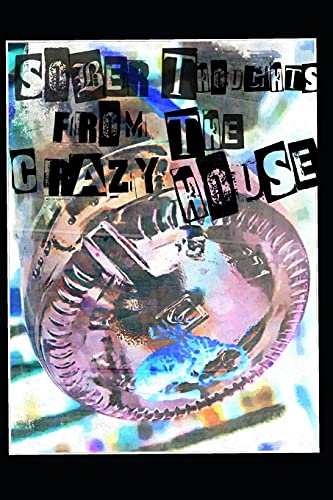
When troubled souls can’t articulate, the sober writings from the recovering mind can be a guidebook. I find this to be a precious collection that I would recommend everyone to read because where thoughts overburden us only words can be saviors. I would have liked to see some illustrations along with the words, making it an immersive experience. I also found it hard to decipher the book cover* art work and would like some insight into it.

*The author reached out to me with a note: “The cover art is the underside of the bottom of a bottle. This was perfect since so many go looking for answers at the bottom of a bottle only to find there aren’t any. You have to get to the bottom to really find that out though.”

J. Maxwell’s work speaks of hope, of finding yourself, and of repeating the message:

Don’t judge yourself

Lest ye cast the first stone!

Emotions

Hidden, unspoken
Behind a facade
Of the daily grind
Chores to keep the mind
Away from the surge
Of emotions unheard.
Latent they lay
Waiting for the day
To capture their prey
Rip apart the semblance
Of holding it together
Stronger they grow
The more you ignore!

Despair

I wrote this before 2019 – a different context & mood – when we did not know about a pandemic waiting to be unleashed. Macabre, how true these lines are today, as we battle second wave of Covid19 in our country.

I see darkness
Bloom from within
Sprouting like deadly fungi
Asphyxiating our breath
Killing our senses
With neon doses of despair