
Book Review: The Fabric Over The Moon

Book: The Fabric Over The Moon

Author: Ferran Plana

Genre: Fiction, Short Stories

Review Copy: Reedsy Discovery

Available at: Amazon.in

Recommended: Must Read

Does a mysterious place with strange customs lift the weight of life and its worries off your shoulders? Do questions of the past become heavier with time? Do dreams spill over into the waking world? Are imaginary creatures more than real? Read a delightful collection by writer Ferran Plana that covers mystical and magical happenings in the lives of common people and uncommon creatures. 

Simple stories, written with flair, offer some fodder for thought. The stories are brief. Not all of them are open-ended, but carry messages that will make you ponder. Stories like Lone or Hero will pull you back as you try to derive the background. Winter will keep you guessing and give you the shivers. The eclectic, the elusive, the unexplained, and even the apocalyptic fill pages of an exciting book. Suspense, humor, fear, sadness, loneliness – a gamut of emotions rush through the pages.

Plana has developed the characters with care and finesse. The stories play out in varied locations, from fantasy lands to a Brazilian parade. On this brilliant canvas, the writer’s imagination sketches wondrous tales. A couple of stories are a spin-off on popular fairytales. I liked the one about flying pigs, but the one with hunters did not appease me much.

The writing is rhythmic and even lyrical at places, akin to poetry. Sample this: “How deep do the teeth of human lust and greed bite that they can lose everything they have in the blink of an eye?” This book is a perfect collection for a quick weekend read or to have scary stories in your quiver to entertain around a bonfire. I always recommend quaint and quirky books like The Fabric Over the Moon. This one is a delight.
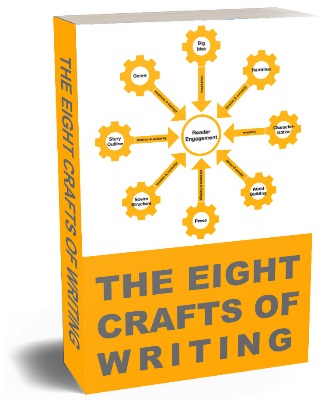
Book Review: The Eight Crafts of Writing

The Eight Crafts of Writing by Stefan Emunds is a must-have on the bookshelf for anyone who wants a succinct reckoner for basic principles of good writing.

Eight-Crafts-of-Writing

Book: The Eight Crafts of Writing

Author: by Stefan Emunds

Genre: Nonfiction, Contemporary, Writing Craft

Review Copy: Reedsy

Available at: Amazon.in

Recommended: Loved it!

As a writer, this book grabbed my attention with its title. The Eight Crafts of Writing by Stefan Emunds is a must-have on the bookshelf for anyone who wants a succinct reckoner for basic principles of good writing.

Presented in a crisp format, the book provides a comprehensive map to navigate the writing jungle. Writers are often distracted by the tools of the trade, the multitude of best writing practices, advice on, and criticism of the styles. They tend to miss the overall picture. They forget the joy of creating art.

Nuggets of wisdom, easy to recall definitions, and a simplistic view of concepts are the cornerstone of this guidebook. It brings forth brief comprehension of elements of creative writing that we think we know but may not have clarity. For instance, defining a story as a genre or distinguishing a fictional piece from a nonfictional one. It talks about the techniques that convert big ideas into a masterpiece.

I realized the value of this book as I delved deeper. This is not a one-time read. It is reference material; a textbook. Highlight the nuances, make notes in the margins, view the online material, and memorize the definitions. I recommend it as a must-have for every student and pursuer of the craft of writing. Simple diagrams support the narrative. Links to external material like videos and articles enhance the reference power of the content.

Each page will draw you in, as you consume it. It’s virtually a tome because not a word is wasted; not a sentence is vagrant. It’s packed with a punch, a solid dose of learning in every single line. Read the whole book in a go or pick up a section and ruminate. You must also access the website – https://www.eightcrafts.com for additional learning through maps and articles. This is a masterclass in a book!

Book Review: Inauspicicous

Book: Inauspicious

Author: Renée L. K. Eastabrooks

Genre: Contemporary Fiction

Review Copy: Reedsy

Available at: Amazon.com

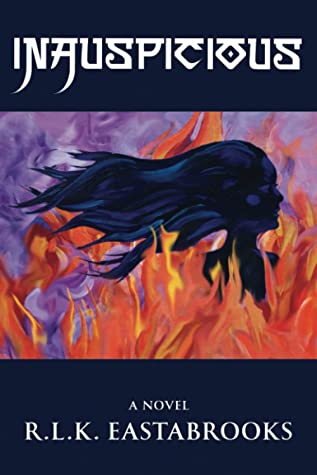
Some aspects of our society and cultural mores are so horrifying that we strive to keep them under wraps. It takes someone with courage, compassion, and empathy to bring forth depraved secrets so that the evil can be ripped apart at the roots. Renée L. K. Eastabrooks pens down the true story of a young widow in Rajasthan, who miraculously escapes the burning pyre of Sati, and goes on to search for a new life across continents. Easterbrook’s novel – Inauspicious – contains insights from her month-long trip to northern India where she worked with widows and street children.

Sati, the practice of burning alive a widow on the pyre of her dead husband, is illegal in India. However, in the hinterlands, the widow is a financial and social burden, and an entire custom is perpetuated to get rid of her while crowning her with divinity. In this horrifying landscape, a young widow, Triti, escapes a lit pyre and through sisterhood and kindness, and the power of her dreams and forte attempts to rewrite her destiny. The novel is gripping from the start and has the reader rooting for the protagonist.

The writer is invested in the local landscape and heritage. The book contains verses, local lullabies, songs, and a few colloquial dialogues. Amidst the sorrow and the depravity, the descriptions of colors, bazaars, spices, jewelry, bring out the visual vibrancy for which Rajasthan is well-known. Eastabrook’s writing is evocative and the observant narrative fills the pages of an otherwise troubling story.

Initially, it seems Triti’s recovery and journey to Delhi and then to New York is not only swift but convenient. A quarter into the book, the 18 years old, Triti, has changed her identity and moved out of the country, only to discover the smoke and mirrors in the world. Her trysts are yet to unfold.

This is a story of sheer grit and the desire to survive, against all odds. From small towns and impoverished societies rise some of the strongest souls who become an inspiration. Triti’s story, even in adversity, speaks of the power of serendipity and the inner strength that can pave the path for redemption and healing if ever there is for those who have experienced the darkest depths of society.

Book Review: The Nonchalant Man Between Worlds

Quite a few stories are narrative in style, imageries piling up, increasingly reflecting the complexity of perceptions. Chan clearly questions, “Has the world always been like this, both insane and chaotic, only he has not seen it as it actually is until now?” This is the theme of the book. Anguished ponderings on the chaos in our minds, purpose, and meaning of our lives, as we try to find a place as friends, lovers, and social beings.

Nonchalant Man

Book: The Nonchalant Man Between Worlds: And Other Stories

Author: William W. Chan

Genre: Fiction, Self-Discovery, Short Stories, Magical Realism

Review Copy: Reedsy

Available on: Amazon.in

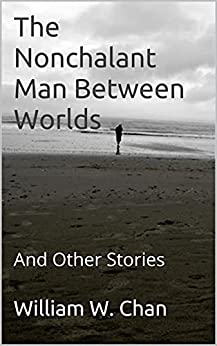
The first story in this collection by William W. Chan, reminded me of Oliver Sack’s work – The Man Who Mistook His Wife for a Hat. Deeper into the book, a Kafkaesque feeling emerged. It is the nature of man to always seek. Some seek answers in science, trying to decipher the mysterious functioning of the brain. Many lean towards metaphysical pondering on the functioning of the heart, soul, and mind.

The Nonchalant Man Between Worlds: And Other Stories are based on this quest, chasing the pertinent question of what’s real in our world and what may lie beyond in other realms. Dreams can be derived from realities and perturb us as much as illusions in waking hours.

The human and anti-human, creatures, demons, evil, fear, all emerge in our thought-scape based on the state of our mind. What happens when something snaps within us and cracks appear in our vision; when the mind is philosophical, the heart is lonely, and the soul disillusioned? Hallucination-based stories like those told by Chan are born.

Nightmares and illusions predominate the stories. Shifting perceptions harass the characters. My personal favorite is, The Fallen, where I sensed a mystery and indulged in a guessing game of who Harold was and his fate. Many of the open-ended stories leave us wondering.

Quite a few stories are narrative in styI can derive dreamsle, imageries piling up, increasingly reflecting the complexity of perceptions. Chan clearly questions, “Has the world always been like this, both insane and chaotic, only he has not seen it as it actually is until now?” This is the theme of the book. Anguished ponderings on the chaos in our minds, purpose, and meaning of our lives, as we try to find a place as friends, lovers, and social beings.

The well-articulated stories are for anyone who has an interest in metaphysical, spiritual, and philosophical notions, motifs, and themes. Interpretation and understanding of Magic Realism shifts from one reader to the next, in fact, one day to another. Such works are not for light readers.

This is a book for rumination and not just about people going about their daily lives. It is for readers who question the happenings and perceptions of their regular existence. It demands attention and offers deep contemplation dressed up as Magical Realism. Keep a highlighter handy for some musings that are worth marking for a later read, as you relate with them.

Book Review: A Million Things To Ask A Neuroscientist

Book: A Million Things To Ask A Neuroscientist: The brain made easy

Author: Mike Tranter

Genre: Teens and Young Adult (13+), Non-Fiction, Science, Neuroscience

Review Copy: Reedsy.com

Also available at: Amazon.in

When the first word in a book is as casual as OK, you wonder if it is of any merit. A quick walk into the preface and you realize the power of this book is in its simplicity. A deep-dive and you are engrossed in the complex world of the brain but in a fun way through this book.

A Million Things To Ask A Neuroscientist – the brain made easy is listed for ages 12+ but I would recommend it for at least Grade 9 and above. Written in a succinct style, it contains some scientific terms that may disengage a younger reader. For anyone into the basics of the science of the brain and fiery neurons filled with questions about how this super organ works and controls the human body, this is one fascinating read.

Mike Tranter, a neuroscientist from the UK, living in California, embellishes this book with some easy diagrams and a lucid style that maintains the depth of the subject but with an informal tone. Complex neuroscience mechanisms are explained with daily life examples. As an avid reader of books related to the brain and the unknown areas that are still waiting to be discovered or fully explained, I found this book to be informative and engaging. From learning about the brain-blood-barrier to the fact of neurogenesis, it draws you into the captivating world of grey and white matter.

The text centers on positive messaging, as it talks about the effect of drugs, addiction, withdrawals, depression, social coupling, the power of learning languages, and recovery after injuries, amongst other things. It is almost like being in an exciting classroom with an amazing teacher who brings the subject home.

The concepts discussed are as intriguing as the brain itself – from lucid dreaming to nightmares, dream incubation and dream prophecy, fear, memories, intelligence, to whether scientists understand how anesthesia works, to the question of whether memories can be transferred to a device using technology. It touches on esoteric aspects of consciousness, meditation, syndromes, and a pertinent query – are male and female brains different? This is just 2/3rd of the book content – there is more to learn and know – so grab a copy!

This book is a thrilling ride and literally food for thought. It does not answer all the teeming questions, for example, I wanted to know about migraines. Well, it is a book that deserves a sequel. The cover design is bright and inviting, and the content is worthy of your time and attention. For more insight, read Mike’s article on why and how he wrote this book.