
Book Review: The Clock in My Mother’s House

Annalisa Crawford, through a collection of stories – The Clock in my Mother’s House – skillfully transports readers into a world where time bends, age defies conventional boundaries, and characters confront their inner demons.

The Clock in My Mother’s House – Book Cover

Book: The Clock in My Mother’s House

Author: Annalisa Crawford

Genre: Fiction, Short stories

Review copy: BookSirens

Available at: Amazon.in

Recommended: Must read

Short stories spanning a variety of themes and notions – some obtuse, some as real as they can be.

Annalisa Crawford, through a collection of stories – The Clock in my Mother’s House – skillfully transports readers into a world where time bends, age defies conventional boundaries, and characters confront their inner demons. “Your future isn’t fixed. It’s like an ocean, flowing in all directions, nothing’s settled until you’re much older.”

Her narratives blur the lines between reality and fantasy, inviting readers to delve into either mystical realms beyond comprehension or to contemplate the workings of the human mind. Each story is meticulously crafted, showcasing Crawford’s expertise in blending elements both mystical and real. For example, in All the Magpies Come Out to Play, she captures fear and hope during a pandemic. In two stories A Thousand Pieces of You and Click – she delves into intense emotions and the power of resilience.

Crawford’s writing style is captivating. Each story is imbued with possibility, inviting readers to immerse themselves in the layered narration and ponder the story’s direction. Even in the confines of a short story, the characters elicit the reader’s interest and empathy. Whether it’s a stormy night or a tranquil weekend, The Clock in My Mother’s House promises an immersive reading experience that stays with the reader long after the last page is turned.


I received an advance review copy for free from BookSirens and I am leaving this review voluntarily.

Book Review: Cat & The Dreamer

Mystery, melancholy, and a struggling protagonist in a novella that is a compelling read: Cat and the Dreamer by Annalisa Crawford

Cat and the Dreamer – Book Cover

Book: Cat & The Dreamer

Author: Annalisa Crawford

Genre: Fiction

Review copy: BookSirens

Available at: Amazon.in

Recommended: Must read

Trigger warning: Death, bullying

Mystery, melancholy, and a struggling protagonist in a novella that is a compelling read

Cat and the Dreamer by Annalisa Crawford is a captivating read that deftly intertwines elements of mystery and melancholy. Crawford’s writing style is exquisite, drawing readers in with its expressive prose and evocative descriptions. “My dreams are always vivid, lurid almost, like an over-exposed photo. It’s how I know what’s real. Reality is tinted with a disappointing grey pallor, washed out, even when the sun is shining and the sky is cobalt blue, or golden leaves are falling from the trees.”

One of the most compelling aspects of the book is Crawford’s character introduction and development. Readers are quickly drawn to Julie, the protagonist, intrigued by her mysterious aura. As an adult professional still living with her parents, her life circumstances pique interest. Julie is portrayed as self-conscious, burdened by the past, and experiencing waking dreams that blur the lines between illusion and reality, as she searches for “A Perfect Dream.”

Crawford expertly spins a storytelling web that captivates readers, keeping them engrossed until the very end. She presents a unique perspective through monologues, with references to the ‘cat’ that emphasize its wild traits over its typical feline cuteness. The book cover is a succinct portrayal of how Julie’s dreams are her escape portal.

Overall, Cat and the Dreamer is a slow-burn fiction that rewards readers with its engaging narrative and unfolding revelations. Crawford’s skillful writing and masterful storytelling make it a must-read for fans of literary fiction. The novel develops gradually, demanding the reader’s concentration, introspection, and appreciation of a poignant story told in a unique style. Importantly, the book sheds light on the complexities of adolescence, the impact of peer influence on young adults, and the burdens one can carry throughout life.


I received an advance review copy for free from BookSirens and I am leaving this review voluntarily.
Book Review: 30 Stories about Life & Death: Flash Fiction

An engaging collection of short stories, spanning geographies, cultures, experiences, and emotions.

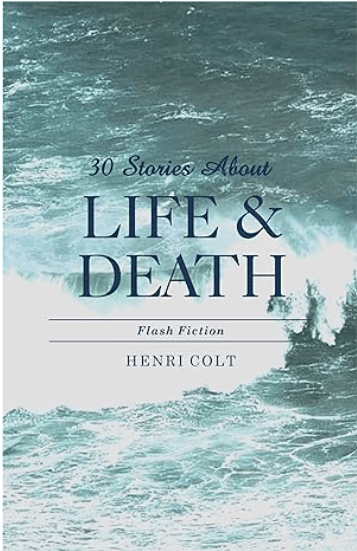
30 Stories about Life & Death: Flash Fiction – Book Cover

Book: 30 Stories about Life & Death: Flash Fiction

Author: Henri Colt

Genre: Fiction, Flash fiction

Review copy: Reedsy

Available at: Amazon.in

Recommended: Must read

An engaging collection of short stories, spanning geographies, cultures, experiences, and emotions.

Brevity in storytelling is a commendable trait. Henri Colt’s 30 Stories about Life & Death: Flash Fiction is a good representation of succinct writing with a flair for engagement. Divided into two parts – Life and Death – this compilation of flash fiction has many riveting tales in various shades.

The stories explore the themes of mortality, love, loss, and connection. They are set in different locations around the world, from Paris to Tokyo, and feature diverse characters and situations. Humorous, tragic, poignant, and surreal – all of them are written in an elegant style that captures the essence of each situation and emotion.

Colt’s vast travel experience has influenced the settings of most of the stories. His passion for life and understanding of human travails and feelings bind words into endearing fiction. As a reader, I could imagine him creating stories during each of his travels, capturing the nuances of places and people in dexterously crafted words. Throughout the narrative, Colt encapsulates various cultural experiences, sometimes with explicit descriptions, and sometimes with tender emotions. The characters are also varied in each story – teenagers, elderly, youthful, adventurous, humorous, travelers, and artists – the writer showcases his observations of different personalities and scenarios.

The depth of characterization in each story keeps the reader engaged. There is much to read between the lines and much to savor and absorb. Through vivid descriptions and surprising twists, Colt portrays the complexity and vulnerability of the human heart and our choices in life. Life lessons are tucked into the stories. For instance, “Don’t think, Kyra” he counsels, “Just be.” Or “… when suffering ends, and joy spills forth like the birth of an idea.” I recommend you get a copy and find the lines that resonate and stay with you, long after you finish reading it.


I received an advance review copy for free from Reedsy and I am leaving this review voluntarily.
Book Review: The Eight Crafts of Writing

The Eight Crafts of Writing by Stefan Emunds is a must-have on the bookshelf for anyone who wants a succinct reckoner for basic principles of good writing.

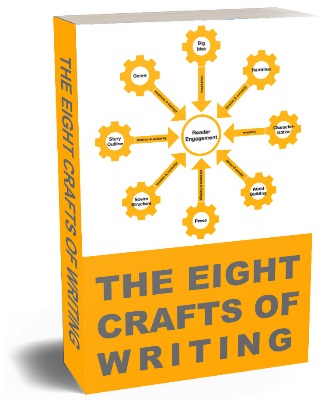
Eight-Crafts-of-Writing

Book: The Eight Crafts of Writing

Author: by Stefan Emunds

Genre: Nonfiction, Contemporary, Writing Craft

Review Copy: Reedsy

Available at: Amazon.in

Recommended: Loved it!

As a writer, this book grabbed my attention with its title. The Eight Crafts of Writing by Stefan Emunds is a must-have on the bookshelf for anyone who wants a succinct reckoner for basic principles of good writing.

Presented in a crisp format, the book provides a comprehensive map to navigate the writing jungle. Writers are often distracted by the tools of the trade, the multitude of best writing practices, advice on, and criticism of the styles. They tend to miss the overall picture. They forget the joy of creating art.

Nuggets of wisdom, easy to recall definitions, and a simplistic view of concepts are the cornerstone of this guidebook. It brings forth brief comprehension of elements of creative writing that we think we know but may not have clarity. For instance, defining a story as a genre or distinguishing a fictional piece from a nonfictional one. It talks about the techniques that convert big ideas into a masterpiece.

I realized the value of this book as I delved deeper. This is not a one-time read. It is reference material; a textbook. Highlight the nuances, make notes in the margins, view the online material, and memorize the definitions. I recommend it as a must-have for every student and pursuer of the craft of writing. Simple diagrams support the narrative. Links to external material like videos and articles enhance the reference power of the content.

Each page will draw you in, as you consume it. It’s virtually a tome because not a word is wasted; not a sentence is vagrant. It’s packed with a punch, a solid dose of learning in every single line. Read the whole book in a go or pick up a section and ruminate. You must also access the website – https://www.eightcrafts.com for additional learning through maps and articles. This is a masterclass in a book!

Book Review: Inauspicicous

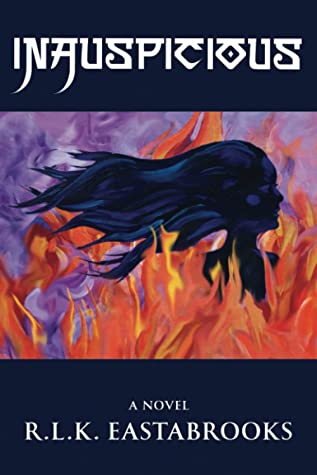
Book: Inauspicious

Author: Renée L. K. Eastabrooks

Genre: Contemporary Fiction

Review Copy: Reedsy

Available at: Amazon.com

Some aspects of our society and cultural mores are so horrifying that we strive to keep them under wraps. It takes someone with courage, compassion, and empathy to bring forth depraved secrets so that the evil can be ripped apart at the roots. Renée L. K. Eastabrooks pens down the true story of a young widow in Rajasthan, who miraculously escapes the burning pyre of Sati, and goes on to search for a new life across continents. Easterbrook’s novel – Inauspicious – contains insights from her month-long trip to northern India where she worked with widows and street children.

Sati, the practice of burning alive a widow on the pyre of her dead husband, is illegal in India. However, in the hinterlands, the widow is a financial and social burden, and an entire custom is perpetuated to get rid of her while crowning her with divinity. In this horrifying landscape, a young widow, Triti, escapes a lit pyre and through sisterhood and kindness, and the power of her dreams and forte attempts to rewrite her destiny. The novel is gripping from the start and has the reader rooting for the protagonist.

The writer is invested in the local landscape and heritage. The book contains verses, local lullabies, songs, and a few colloquial dialogues. Amidst the sorrow and the depravity, the descriptions of colors, bazaars, spices, jewelry, bring out the visual vibrancy for which Rajasthan is well-known. Eastabrook’s writing is evocative and the observant narrative fills the pages of an otherwise troubling story.

Initially, it seems Triti’s recovery and journey to Delhi and then to New York is not only swift but convenient. A quarter into the book, the 18 years old, Triti, has changed her identity and moved out of the country, only to discover the smoke and mirrors in the world. Her trysts are yet to unfold.

This is a story of sheer grit and the desire to survive, against all odds. From small towns and impoverished societies rise some of the strongest souls who become an inspiration. Triti’s story, even in adversity, speaks of the power of serendipity and the inner strength that can pave the path for redemption and healing if ever there is for those who have experienced the darkest depths of society.