“Dedicated to all The Unseen: Be they people, creatures, plants, words or dreams…”
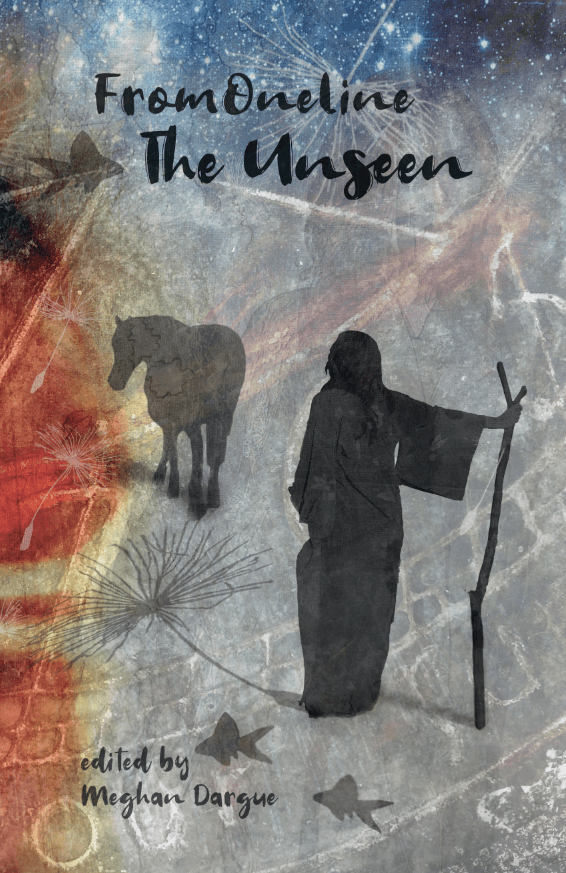
The Unseen: An anthology of artwork, flash fiction, and poems
I am thrilled to be a part of a brand new anthology – The Unseen – from Kobayaashi Studios. Entries curated and edited by Meghan Dargue from across the globe have resulted in a whooping collection of 389 pieces of poetry, flash fiction, and artwork by 115 contributors.
It’s an honor that all 6 of my submitted poems have found a home in this anthology and will no more be “unseen”.
Grab your copy of The Unseen. The Paperback is available to buy from Pothi (India) and your local Amazon site.
The Fantastic Other is open for Submissions: Poetry, Fiction, Flash Fiction, and Art! The deadline to submit for this issue is July 14th at 11:59 PM EST.
It’s never too late for an exciting update!
Last year, I had the incredible opportunity to volunteer as a beta reader for The Fantastic Other (TFO)—an online magazine that celebrates all things speculative, from fantasy and sci-fi to magical realism and the paranormal. Through my association with TFO, I delved into some of the most captivating and innovative works by talented writers and artists. Earlier this year, I was thrilled to be part of their team as we shortlisted winners for the Winter 2024 Flash Fiction Contest!
As I got to know the brilliant art and literature enthusiasts—Grace, Flora, and Amy—I realized that this was more than just volunteering. It was an opportunity to learn about running an online creative journal that brings together a vibrant community of artists and writers.
And when they invited me to join TFO as an Assistant Editor, there was no looking back! It’s my chance to champion indie writers and artists, collaborate with an inspiring team, and keep growing in this dynamic space.
My weekends are abuzz as I dive into amazing submissions for the upcoming issue. Each story is a revelation, and every poem is an insightful journey. The TFO team’s dedication to curating exceptional content for eager readers is truly fulfilling.
I’m proud to share this pro bono association with TFO and thrilled to feature on their Masthead.
We are proud to announce that Aneesha Shewani is joining our team as an Assistant Editor.
Our little mag has been getting a growth spurt this past year, so her expertise and experience will help us to keep things fantastic, with much more to come!
The Fantastic Other is open for submissions.
We are currently reading for our Summer 2024 issue. The deadline to submit for this issue is July 14th at 11:59 PM EST.
Read the Guidelines and join this fabulous “place for the discussion of dreams, the analyses of fantasies, the prodding of popular larks.”
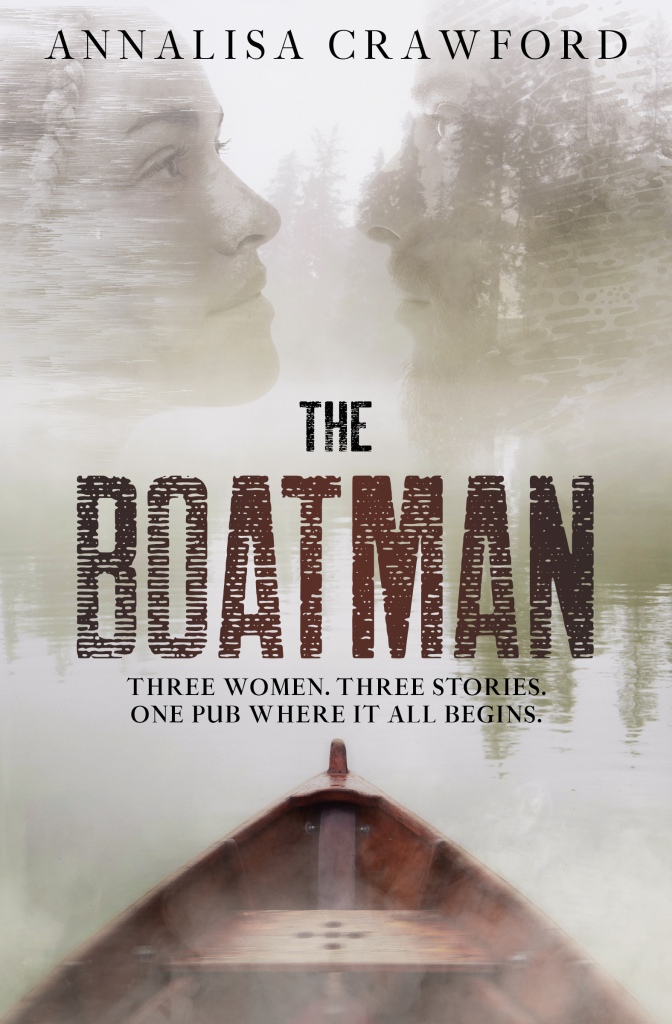
Three haunting short stories that converge into a novella.
“The Boatman” is a collection of interlinked stories that revolve around three women, each with a unique connection to an old pub known as “The Boatman”. This pub, steeped in history, serves as a sanctuary for those seeking solace and friendships. Within its centuries-old walls, the pub becomes a character in its own right—a silent observer of the lives of Quinn, Ella, and Rona.
“The Boatman collects misfits. Strange solitary creatures who yearn for contact with the outside world—but not too much.”
Annalisa Crawford weaves a tapestry of suspense around her lead characters. Demons of the past and premonitions haunt these women as they navigate life and relationships. The narrative is atmospheric, with the pub a haunting backdrop to the unfolding drama. Strangely, the title reminded me of the legend of the ferryman who carries souls to the netherworld. With death lingering in the pages, this connection seems relevant. The protagonists are trying to escape inner demons, and this is a metaphor for how we escape all our pain, trauma, and misgivings at death.
The first story, “The Traveller,” is my favorite, and the main character, Quinn, evokes empathy. She bemoans,
“… I thought I would die of grief. But I was wrong. I live on.”
Her grief is palpable:
“The day begins, and I am empty.”
Ella’s story, the second in the series, has an interesting premise but could have been shorter. The deep dive into Ella’s inner turmoil, while insightful, borders on the repetitive. The last story in the book is an experimental writing piece that ties up the entire narrative, making this collection of three short stories a novella.
The writing style is entrancing, focusing on the characters’ complexities and the subtle interplay of their interactions within the confines of The Boatman, in their homes, and at work. The lonely battles of each character are relatable, yet how Crawford wraps up each story is unique. In the last story, as characters and events converge, an element of intrigue fills the pages like the slow-rolling mist from the river across the pub.
Are the women and their companions just trapped in the past, or have they found a way to escape trepidations, conquer longings, and culminate an eternal quest for a home, love, and belongingness? Read “The Boatman” to appreciate the dark, character-driven stories with a hint of the paranormal. Annalisa Crawford’s masterful storytelling and richly drawn characters make this a must-read for fans of literary fiction, particularly those who enjoy short stories.
I received an advance review copy for free from BookSirens and I am leaving this review voluntarily.
Annalisa Crawford, through a collection of stories – The Clock in my Mother’s House – skillfully transports readers into a world where time bends, age defies conventional boundaries, and characters confront their inner demons.
Short stories spanning a variety of themes and notions – some obtuse, some as real as they can be.
Annalisa Crawford, through a collection of stories – The Clock in my Mother’s House – skillfully transports readers into a world where time bends, age defies conventional boundaries, and characters confront their inner demons. “Your future isn’t fixed. It’s like an ocean, flowing in all directions, nothing’s settled until you’re much older.”
Her narratives blur the lines between reality and fantasy, inviting readers to delve into either mystical realms beyond comprehension or to contemplate the workings of the human mind. Each story is meticulously crafted, showcasing Crawford’s expertise in blending elements both mystical and real. For example, in All the Magpies Come Out to Play, she captures fear and hope during a pandemic. In two stories A Thousand Pieces of You and Click – she delves into intense emotions and the power of resilience.
Crawford’s writing style is captivating. Each story is imbued with possibility, inviting readers to immerse themselves in the layered narration and ponder the story’s direction. Even in the confines of a short story, the characters elicit the reader’s interest and empathy. Whether it’s a stormy night or a tranquil weekend, The Clock in My Mother’s House promises an immersive reading experience that stays with the reader long after the last page is turned.
I received an advance review copy for free from BookSirens and I am leaving this review voluntarily.
A novel that poignantly delves into the complexities of generational trauma and its effects on mental health.
In Heather S. Lonczak’s contemporary novel, The Fragility of Light, generational trauma and the fragile state of mental health cast their shadows over the life of Sylvia “Sunny” Zielinski. Sunny’s picture-perfect introverted existence takes a harrowing turn when she starts experiencing psychotic episodes.
Lonczak masterfully portrays mental illness, but not before immersing us in the wholesome experiences of youth—promising careers, love in the air, and a wedding on the horizon. Through her poetic prose, Lonczak transports us to a world steeped in charm and nostalgia, where the scent of lilies mingles with sun-warmed tomatoes still clinging to the vine. Sunny’s encounter with Joshua ignites an idyllic love, and their future seems vibrant.
As Sunny introduces Joshua to her gentle and wholesome family, the foundations of their new life appear unshakable. Yet, lurking in the past are shadows that resurface tragically, rocking their boat. Cracks emerge, and the once sweet and tender narration takes on gray overtones, plunging Sunny and all who love her into a nerve-wracking deluge.
Lonczak intricately weaves Sunny’s story with the perspectives of Joshua and Peter, her father. Both men grapple with the heart-wrenching realization that the one they love dearly is suffering, yet they find themselves powerless to alleviate her pain. Lonczak’s portrayal of their struggle captures the complexities of love and helplessness in the face of mental illness. Despite the recurring nature of shared experiences in the storyline, delving into Joshua and Peter’s tribulations remains relevant. Both men must bear the consequences: Joshua faces a crumbling present, and the future appears fraught with fear. Meanwhile, Peter’s past wounds resurface, raw and bleeding. Their intertwined struggles provide essential context, revealing the impact of generational trauma on their lives.
Lonczak’s novel is crucial to comprehend the impact of grief-stricken depression and the role of genetics in mental health. In brief lucid moments, Sunny glimpses her downward spiral, but the psychotic episodes remain beyond her control. Within her fragile mind, she carries the storm of genetic and generational trauma, unable to prevent the destruction it unleashes.
Skillfully delving into the complexities of trauma and its lingering effects, Lonczak invites readers to discover whether Sunny can battle her demons and whether Joshua’s love and devotion can withstand the searing trial. This novel, with its close exploration of matters of the mind and heart, leaves a lasting impression. Fans of literary fiction will find much to admire in this thought-provoking and emotionally resonant work with strong writing.
I received an advance review copy for free from BookSirens and I am leaving this review voluntarily.



 Blue Pen Strokes