
Book Review: The Boatman

Annalisa Crawford, through three short stories, featuring female protagonists, who frequent the pub, The Boatman, creates a haunting novella.

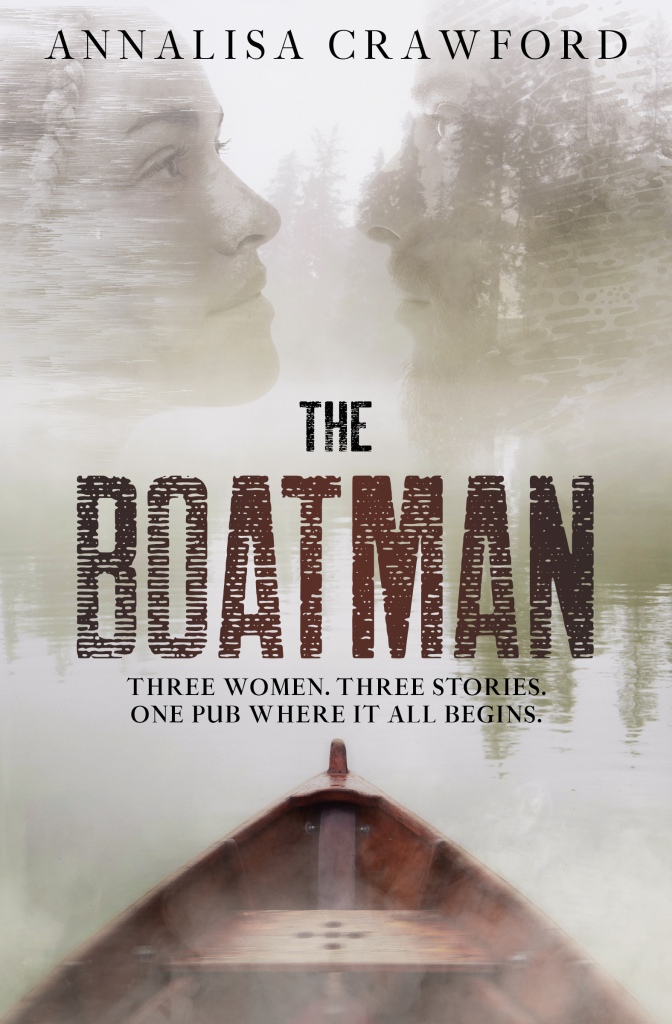
The Boatman by Annalisa Crawford – Book Cover

Book: The Boatman

Author: Annalisa Crawford

Genre: Fiction, Short stories

Review copy: BookSirens

Available at: Amazon.in

Recommended: Must read

Three haunting short stories that converge into a novella.

“The Boatman” is a collection of interlinked stories that revolve around three women, each with a unique connection to an old pub known as “The Boatman”. This pub, steeped in history, serves as a sanctuary for those seeking solace and friendships. Within its centuries-old walls, the pub becomes a character in its own right—a silent observer of the lives of Quinn, Ella, and Rona.

The Boatman collects misfits. Strange solitary creatures who yearn for contact with the outside world—but not too much.”

Annalisa Crawford weaves a tapestry of suspense around her lead characters. Demons of the past and premonitions haunt these women as they navigate life and relationships. The narrative is atmospheric, with the pub a haunting backdrop to the unfolding drama. Strangely, the title reminded me of the legend of the ferryman who carries souls to the netherworld. With death lingering in the pages, this connection seems relevant. The protagonists are trying to escape inner demons, and this is a metaphor for how we escape all our pain, trauma, and misgivings at death.

The first story, “The Traveller,” is my favorite, and the main character, Quinn, evokes empathy. She bemoans,

… I thought I would die of grief. But I was wrong. I live on.

Her grief is palpable:

“The day begins, and I am empty.”

Ella’s story, the second in the series, has an interesting premise but could have been shorter. The deep dive into Ella’s inner turmoil, while insightful, borders on the repetitive. The last story in the book is an experimental writing piece that ties up the entire narrative, making this collection of three short stories a novella.

The writing style is entrancing, focusing on the characters’ complexities and the subtle interplay of their interactions within the confines of The Boatman, in their homes, and at work. The lonely battles of each character are relatable, yet how Crawford wraps up each story is unique. In the last story, as characters and events converge, an element of intrigue fills the pages like the slow-rolling mist from the river across the pub.

Are the women and their companions just trapped in the past, or have they found a way to escape trepidations, conquer longings, and culminate an eternal quest for a home, love, and belongingness? Read “The Boatman” to appreciate the dark, character-driven stories with a hint of the paranormal. Annalisa Crawford’s masterful storytelling and richly drawn characters make this a must-read for fans of literary fiction, particularly those who enjoy short stories.


I received an advance review copy for free from BookSirens and I am leaving this review voluntarily.

Book Review: The Clock in My Mother’s House

Annalisa Crawford, through a collection of stories – The Clock in my Mother’s House – skillfully transports readers into a world where time bends, age defies conventional boundaries, and characters confront their inner demons.

The Clock in My Mother’s House – Book Cover

Book: The Clock in My Mother’s House

Author: Annalisa Crawford

Genre: Fiction, Short stories

Review copy: BookSirens

Available at: Amazon.in

Recommended: Must read

Short stories spanning a variety of themes and notions – some obtuse, some as real as they can be.

Annalisa Crawford, through a collection of stories – The Clock in my Mother’s House – skillfully transports readers into a world where time bends, age defies conventional boundaries, and characters confront their inner demons. “Your future isn’t fixed. It’s like an ocean, flowing in all directions, nothing’s settled until you’re much older.”

Her narratives blur the lines between reality and fantasy, inviting readers to delve into either mystical realms beyond comprehension or to contemplate the workings of the human mind. Each story is meticulously crafted, showcasing Crawford’s expertise in blending elements both mystical and real. For example, in All the Magpies Come Out to Play, she captures fear and hope during a pandemic. In two stories A Thousand Pieces of You and Click – she delves into intense emotions and the power of resilience.

Crawford’s writing style is captivating. Each story is imbued with possibility, inviting readers to immerse themselves in the layered narration and ponder the story’s direction. Even in the confines of a short story, the characters elicit the reader’s interest and empathy. Whether it’s a stormy night or a tranquil weekend, The Clock in My Mother’s House promises an immersive reading experience that stays with the reader long after the last page is turned.


I received an advance review copy for free from BookSirens and I am leaving this review voluntarily.
Book Review: 30 Stories about Life & Death: Flash Fiction

An engaging collection of short stories, spanning geographies, cultures, experiences, and emotions.

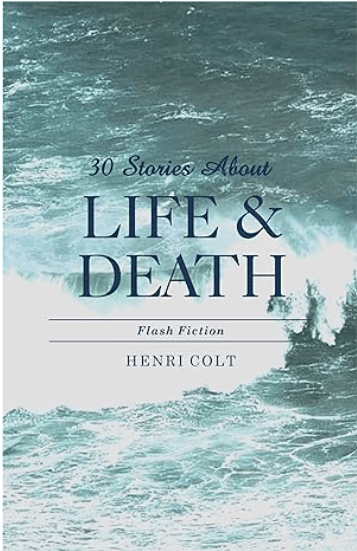
30 Stories about Life & Death: Flash Fiction – Book Cover

Book: 30 Stories about Life & Death: Flash Fiction

Author: Henri Colt

Genre: Fiction, Flash fiction

Review copy: Reedsy

Available at: Amazon.in

Recommended: Must read

An engaging collection of short stories, spanning geographies, cultures, experiences, and emotions.

Brevity in storytelling is a commendable trait. Henri Colt’s 30 Stories about Life & Death: Flash Fiction is a good representation of succinct writing with a flair for engagement. Divided into two parts – Life and Death – this compilation of flash fiction has many riveting tales in various shades.

The stories explore the themes of mortality, love, loss, and connection. They are set in different locations around the world, from Paris to Tokyo, and feature diverse characters and situations. Humorous, tragic, poignant, and surreal – all of them are written in an elegant style that captures the essence of each situation and emotion.

Colt’s vast travel experience has influenced the settings of most of the stories. His passion for life and understanding of human travails and feelings bind words into endearing fiction. As a reader, I could imagine him creating stories during each of his travels, capturing the nuances of places and people in dexterously crafted words. Throughout the narrative, Colt encapsulates various cultural experiences, sometimes with explicit descriptions, and sometimes with tender emotions. The characters are also varied in each story – teenagers, elderly, youthful, adventurous, humorous, travelers, and artists – the writer showcases his observations of different personalities and scenarios.

The depth of characterization in each story keeps the reader engaged. There is much to read between the lines and much to savor and absorb. Through vivid descriptions and surprising twists, Colt portrays the complexity and vulnerability of the human heart and our choices in life. Life lessons are tucked into the stories. For instance, “Don’t think, Kyra” he counsels, “Just be.” Or “… when suffering ends, and joy spills forth like the birth of an idea.” I recommend you get a copy and find the lines that resonate and stay with you, long after you finish reading it.


I received an advance review copy for free from Reedsy and I am leaving this review voluntarily.

The selection of a sacred strawberry

Writers often lament writer’s block and procrastination as colossal hurdles to a regular writing practice. While both hold a genuine place in the writers’ list of woes, it is my experience that nothing is a bigger enemy of the creative journey than ill-disposed mental health. One can create masterpieces in sorrow and carve out brilliant art in happiness but it is hard to get a grip on artistic pursuits when one is stressed or anxious. 

A stack of books and an open notebook

Since mid-November 2022 until now I have been struggling – first with a long spell of flu that lasted for a month and a half. Then, somewhere during this difficult time, debilitating worry and paranoia found their way into my life. I was trapped in a maze of repetitive thoughts and stress-induced negativity. I tried many things to heal my mind but it was a lonely journey.

The biggest casualty of my mental ill-health was my poetry. I realize how delicate a device poetry is. It demands total dedication. A disrupted mental frame cannot do justice to the pursuits of the poet. 

One of the tools recommended for mindfulness and healing is journaling. I do vouch for its benefits but that is a post for another day. What I discovered amidst these trials was that for me story writing is closer to journaling.

As my physical health gradually recovered after Christmas, I came across the Penfluenza 3.0 contest by WriteFluence. I decided to start writing because the theme of Ritual called out to me. Each day, I poured a lot of love and care into my draft. It slowly became a healthy diversion. My mind would be at ease at least in those crafting moments. The story itself was therapeutic.

My efforts were worthwhile because when the contest results were declared, I was glad to know that my short story was one of the winning entries. Today, I received a heartwarming message that the anthology that contains my short story is now available for purchase. Read about The Selection of a Sacred Strawberry.

Meanwhile, I tried to go back to my favorite daily activity of writing for poetry prompts. It didn’t happen. Thoughts arrived wrapped in imagery but the words wouldn’t manifest. I felt for my forsaken blog but when you are broken, you can’t create a piece that is as fragile as poetry. Short story, in my case, was the sturdier sibling of the poem!

This weekend, I returned to my blog to publish a book review. Some words formed and then they started to string together. I am not sure if I will be able to write frequently because unresolved issues still camp in my mind space. But I am trying – each day – to let go of what I cannot control and to get a grip on the things I can create.

Book Review: The Fabric Over The Moon

Book: The Fabric Over The Moon

Author: Ferran Plana

Genre: Fiction, Short Stories

Review Copy: Reedsy Discovery

Available at: Amazon.in

Recommended: Must Read

Does a mysterious place with strange customs lift the weight of life and its worries off your shoulders? Do questions of the past become heavier with time? Do dreams spill over into the waking world? Are imaginary creatures more than real? Read a delightful collection by writer Ferran Plana that covers mystical and magical happenings in the lives of common people and uncommon creatures. 

Simple stories, written with flair, offer some fodder for thought. The stories are brief. Not all of them are open-ended, but carry messages that will make you ponder. Stories like Lone or Hero will pull you back as you try to derive the background. Winter will keep you guessing and give you the shivers. The eclectic, the elusive, the unexplained, and even the apocalyptic fill pages of an exciting book. Suspense, humor, fear, sadness, loneliness – a gamut of emotions rush through the pages.

Plana has developed the characters with care and finesse. The stories play out in varied locations, from fantasy lands to a Brazilian parade. On this brilliant canvas, the writer’s imagination sketches wondrous tales. A couple of stories are a spin-off on popular fairytales. I liked the one about flying pigs, but the one with hunters did not appease me much.

The writing is rhythmic and even lyrical at places, akin to poetry. Sample this: “How deep do the teeth of human lust and greed bite that they can lose everything they have in the blink of an eye?” This book is a perfect collection for a quick weekend read or to have scary stories in your quiver to entertain around a bonfire. I always recommend quaint and quirky books like The Fabric Over the Moon. This one is a delight.