The Fantastic Other and my continued association with the brilliant masthead

The Fantastic Other is open for Submissions: Poetry, Fiction, Flash Fiction, and Art! The deadline to submit for this issue is July 14th at 11:59 PM EST.

It’s never too late for an exciting update!

Last year, I had the incredible opportunity to volunteer as a beta reader for The Fantastic Other (TFO)—an online magazine that celebrates all things speculative, from fantasy and sci-fi to magical realism and the paranormal. Through my association with TFO, I delved into some of the most captivating and innovative works by talented writers and artists. Earlier this year, I was thrilled to be part of their team as we shortlisted winners for the Winter 2024 Flash Fiction Contest!

As I got to know the brilliant art and literature enthusiasts—Grace, Flora, and Amy—I realized that this was more than just volunteering. It was an opportunity to learn about running an online creative journal that brings together a vibrant community of artists and writers.

And when they invited me to join TFO as an Assistant Editor, there was no looking back! It’s my chance to champion indie writers and artists, collaborate with an inspiring team, and keep growing in this dynamic space.

My weekends are abuzz as I dive into amazing submissions for the upcoming issue. Each story is a revelation, and every poem is an insightful journey. The TFO team’s dedication to curating exceptional content for eager readers is truly fulfilling.

I’m proud to share this pro bono association with TFO and thrilled to feature on their Masthead.


@FantasticOther
11:25 PM · Jun 3, 2024

We are proud to announce that Aneesha Shewani is joining our team as an Assistant Editor.

Our little mag has been getting a growth spurt this past year, so her expertise and experience will help us to keep things fantastic, with much more to come!


The Fantastic Other is open for submissions.

We are currently reading for our Summer 2024 issue. The deadline to submit for this issue is July 14th at 11:59 PM EST.

Read the Guidelines and join this fabulous “place for the discussion of dreams, the analyses of fantasies, the prodding of popular larks.”

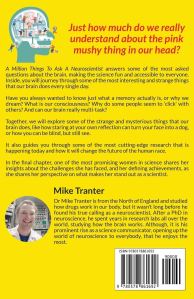
Book Review: A Million Things To Ask A Neuroscientist

Book: A Million Things To Ask A Neuroscientist: The brain made easy

Author: Mike Tranter

Genre: Teens and Young Adult (13+), Non-Fiction, Science, Neuroscience

Review Copy: Reedsy.com

Also available at: Amazon.in

When the first word in a book is as casual as OK, you wonder if it is of any merit. A quick walk into the preface and you realize the power of this book is in its simplicity. A deep-dive and you are engrossed in the complex world of the brain but in a fun way through this book.

A Million Things To Ask A Neuroscientist – the brain made easy is listed for ages 12+ but I would recommend it for at least Grade 9 and above. Written in a succinct style, it contains some scientific terms that may disengage a younger reader. For anyone into the basics of the science of the brain and fiery neurons filled with questions about how this super organ works and controls the human body, this is one fascinating read.

Mike Tranter, a neuroscientist from the UK, living in California, embellishes this book with some easy diagrams and a lucid style that maintains the depth of the subject but with an informal tone. Complex neuroscience mechanisms are explained with daily life examples. As an avid reader of books related to the brain and the unknown areas that are still waiting to be discovered or fully explained, I found this book to be informative and engaging. From learning about the brain-blood-barrier to the fact of neurogenesis, it draws you into the captivating world of grey and white matter.

The text centers on positive messaging, as it talks about the effect of drugs, addiction, withdrawals, depression, social coupling, the power of learning languages, and recovery after injuries, amongst other things. It is almost like being in an exciting classroom with an amazing teacher who brings the subject home.

The concepts discussed are as intriguing as the brain itself – from lucid dreaming to nightmares, dream incubation and dream prophecy, fear, memories, intelligence, to whether scientists understand how anesthesia works, to the question of whether memories can be transferred to a device using technology. It touches on esoteric aspects of consciousness, meditation, syndromes, and a pertinent query – are male and female brains different? This is just 2/3rd of the book content – there is more to learn and know – so grab a copy!

This book is a thrilling ride and literally food for thought. It does not answer all the teeming questions, for example, I wanted to know about migraines. Well, it is a book that deserves a sequel. The cover design is bright and inviting, and the content is worthy of your time and attention. For more insight, read Mike’s article on why and how he wrote this book.